Praying salah with joint pain is fully permitted, and the adapted prayer counts exactly the same as a standing one. If standing hurts, you may pray sitting; if sitting hurts, you may pray lying on your side, using small head movements for ruku and sujood. This guide walks through the Islamic allowances, the practical adjustments, and the setup that lets you keep praying without pushing a painful joint past what it can take.
Chronic pain is more common than many people realize. Nearly one in four US adults lived with chronic pain in 2023, and women were affected more often than men, at 25.4% compared with 23.2%, according to the CDC National Center for Health Statistics. If stiff knees, aching hips, or a sore back have changed how you move through your day, your prayer can change with you.
The Islamic Allowances for Praying Sitting or Lying Down
Islam builds flexibility into prayer for anyone whose body cannot manage the full standing form. The foundational guidance comes from the Prophet's instruction to Imran ibn Husayn, who had a painful condition and asked how he should pray. The answer was direct: "Pray standing; if you cannot, then sitting; and if you cannot, then lying on your side," recorded in Sahih al-Bukhari.
That single hadith gives you a clear order of options:
- Stand if you can do so without real hardship.
- Sit if standing causes pain or risks worsening your condition.
- Lie on your side, facing the qiblah, if sitting is also too difficult.
- Lie on your back with your feet toward the qiblah if lying on your side is not possible.
You do not need a doctor's note or anyone's permission to move down this list. Genuine pain, weakness, or fear that standing will aggravate your joints is enough reason. The point is to pray in the most complete form your body honestly allows, not to force a position that leaves you unable to concentrate or that sets off a flare.
if in doubt ask a scholar but don't lose the grip to your faith and the connection to Allah.
Adapting Ruku and Sujood When Joints Are Stiff or Painful
When bending for ruku or lowering into sujood is not possible, you replace the full movement with a nod of the head. The key rule is to keep the two actions distinct: bow your head a little for ruku, then lower it further for sujood so each position is clearly its own.
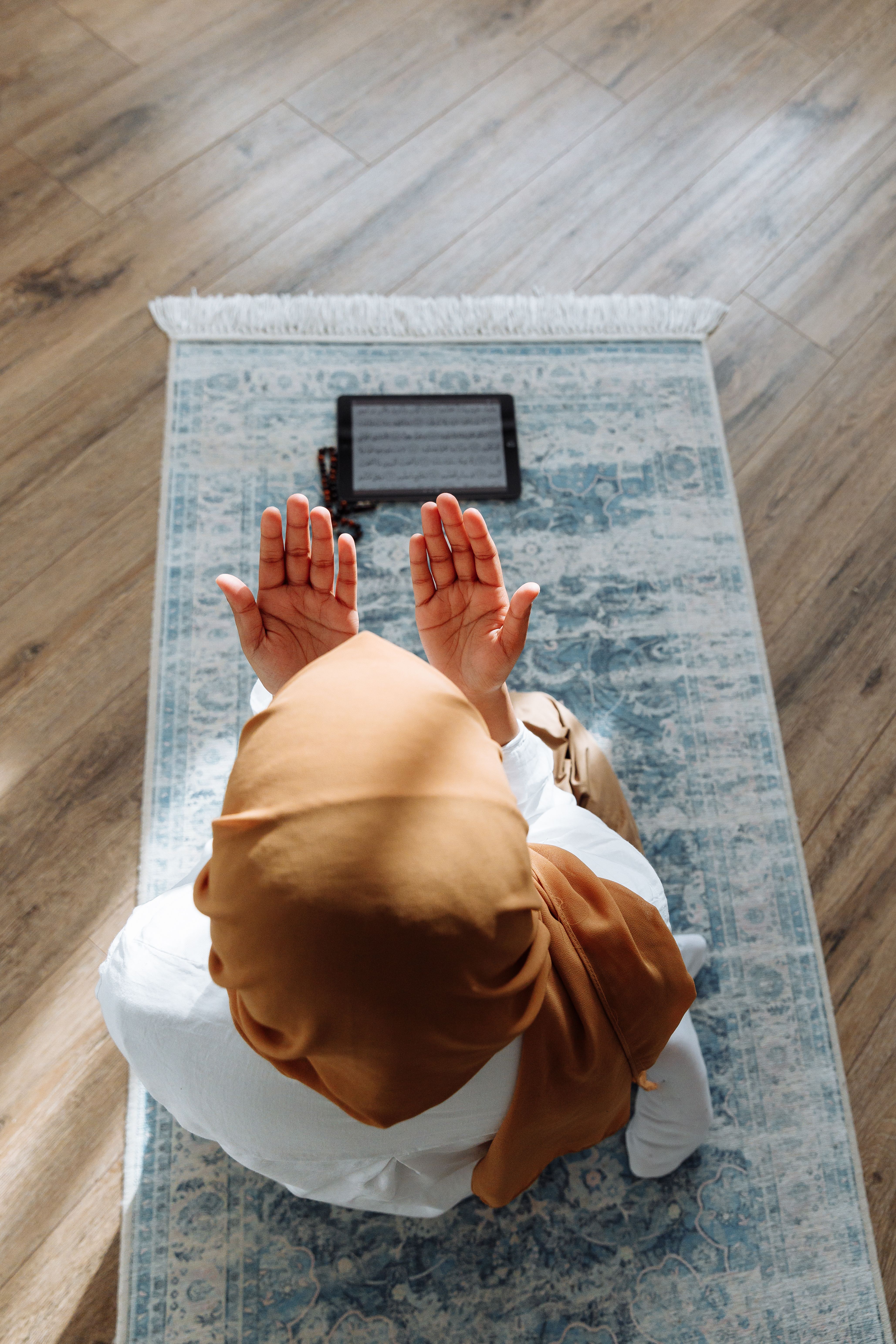
Here is how the main positions translate when you are seated:
- Qiyam (standing portion): Sit upright and recite as you normally would.
- Ruku: Lean your upper body forward slightly and lower your head.
- Sujood: Lean a little further and bring your head down more than you did for ruku.
- Jalsa (sitting between prostrations): Return to your upright seated position.
If you can place your forehead on a raised surface such as a cushion on a side table, that is good, but you should not lift an object up to your forehead to prostrate on it. When no prostration surface works, the head nod alone is accepted. Do whatever part of each movement you can manage, and let the nod stand in for the rest.
if in doubt ask a scholar but don't lose the grip to your faith and the connection to Allah.
Using Cushions, Chairs, and Supports in Your Prayer Space
A few simple props can turn a painful prayer into a steady one. The goal is to support the joints that carry the most load so you can hold each position long enough to feel settled.
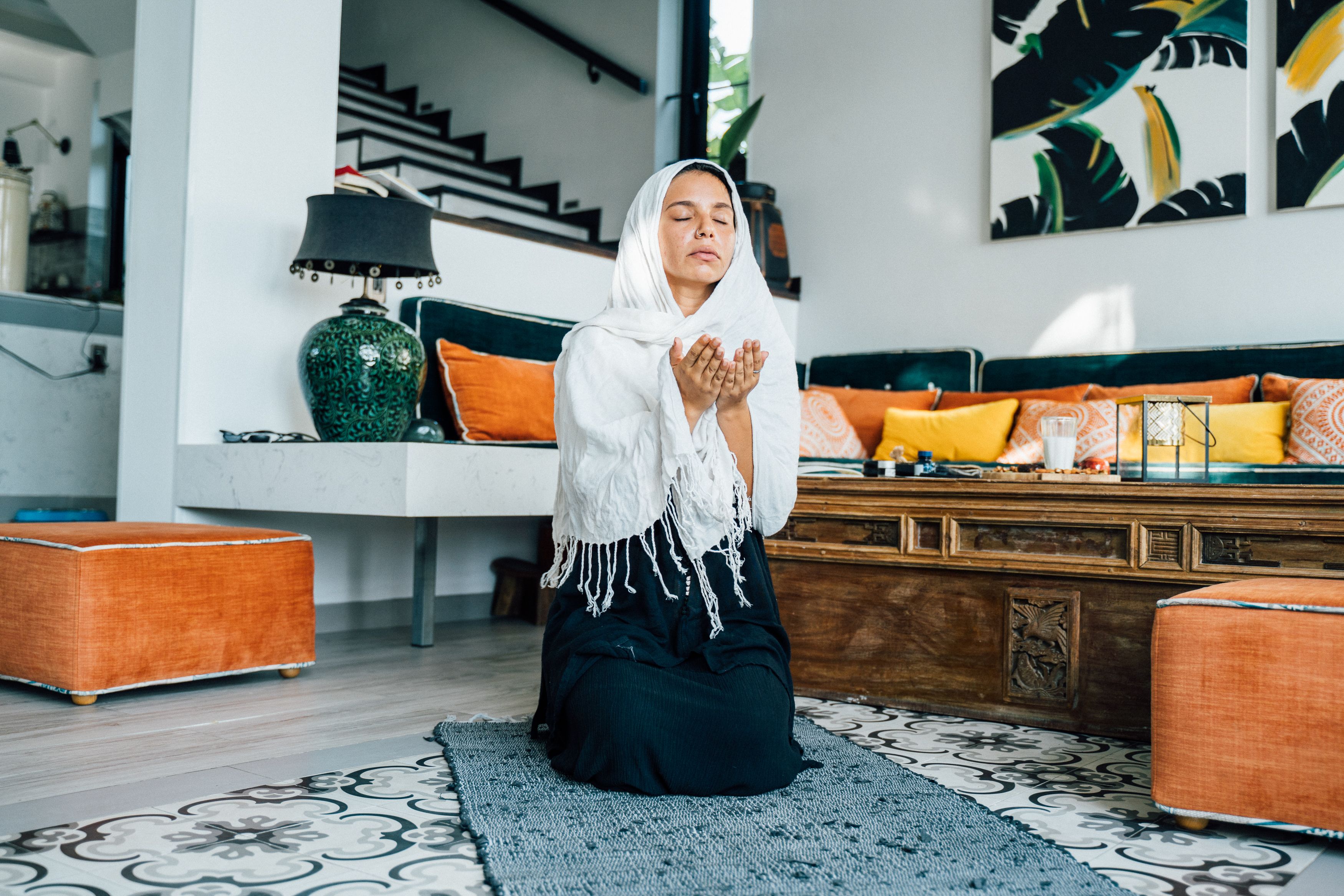
Consider setting up your prayer space with:
- A firm chair with a flat seat and a supportive back, placed facing the qiblah. A dining chair usually works better than a soft armchair that you sink into.
- A cushion under the knees if you pray on the floor and kneeling is the painful part. A folded towel or a dedicated knee pad also helps.
- A bolster or rolled blanket behind your lower back for lumbar support during the seated portions.
- A raised surface at head height, such as a stack of cushions on a low stool, if you want something to prostrate toward.
- A non-slip mat under your prayer rug so nothing shifts as you move or push up to standing.
Keep everything within arm's reach before you begin so you are not twisting or stretching to grab a prop mid-prayer. Arranging your space once, in advance, removes a recurring source of strain.
Praying Salah With Joint Pain During a Flare
On a flare day, your job is simply to pray in whatever position you can hold, even if that is less than you managed yesterday. A shortened, seated, or lying prayer performed during a flare is complete and valid; you are not required to make it up later in a fuller form.
A few practical habits make flare days easier:
- Pray early in the window. Starting as soon as a prayer time opens gives you room to rest or reposition if the pain rises.
- Break up wudu. Sit to wash where you can, and keep a chair by the sink so standing is not part of your preparation.
- Lower your expectations without guilt. If you can only manage the obligatory units seated, that is enough. Sunnah prayers can be set aside when your body needs rest.
- Warm the joint first. A warm compress or gentle movement before prayer can ease the worst stiffness enough to let you settle.
Pacing your activity across the day so you are not completely spent by Isha is a skill worth building. The faith-based pain management support offered through The Chronic Shift is designed for exactly this, helping Muslim women plan their energy around prayer times rather than against them.
Adapted Worship Is Fully Valid
There is no spiritual penalty for praying in the form your body allows. The scholars agree that a person who prays sitting because standing causes hardship receives the same reward as one who prays standing, since the true measure is your sincere effort within your real limits. Allah asks you to keep your duty "as much as you can," and a seated or lying prayer offered in genuine need meets that fully.
Letting go of the idea that only a standing prayer "really counts" often brings relief on its own. Your khushu, your presence and focus, matters far more than the depth of your bow. Many women find their concentration actually improves once they stop fighting a position that hurt and settled into one that let them breathe.
If pain has been quietly shrinking your prayer life, the next step is to set up one comfortable prayer position this week and use it without second-guessing. Choose your chair or cushion, face the qiblah, and pray the next salah seated. Protecting your worship by adapting it is the faithful choice, and it keeps the connection you value most within reach every single day.
if in doubt ask a scholar but don't lose the grip to your faith and the connection to Allah.