If back pain is stealing your sleep, the gentlest positions for most people are lying on your side with a pillow between your knees, or on your back with a pillow under your knees. Both keep your spine in a soft, neutral line so the muscles and ligaments that worked hard all day can finally rest.
Sleep and pain feed each other. When pain disrupts your rest, your body has less chance to recover, and a tired nervous system can make the next day's aches feel louder. Finding better sleep positions for back pain will not cure a chronic condition, but it can lower the strain your body carries through the night and give you a little more room to wake up feeling like yourself.
A quick, honest note from me, Aiza: what follows is gentle guidance, not medical treatment. It is meant to sit alongside the care of your doctor, never in place of it.
How Your Sleep Posture Affects Back and Joint Pain
You spend hours in one position while you sleep, so that position matters. During the day, the soft tissues around your spine stretch and compress as you move. At night, a neutral, well-supported posture gives those tissues a chance to settle back toward their resting length instead of staying pulled or pinched.
When your spine is twisted, arched or unsupported for hours, pressure gathers in the same tender spots. For many women living with chronic pain, that is why mornings can feel so stiff and heavy before the day has even begun.
Chronic pain is also more common than many women realise, so if this is your reality, you are far from alone. According to the US Centers for Disease Control and Prevention, 20.4% of adults had chronic pain in the three months studied, and the figure was higher for women than for men. Numbers like these are a reminder that your experience is real and widely shared, not something to carry quietly on your own.
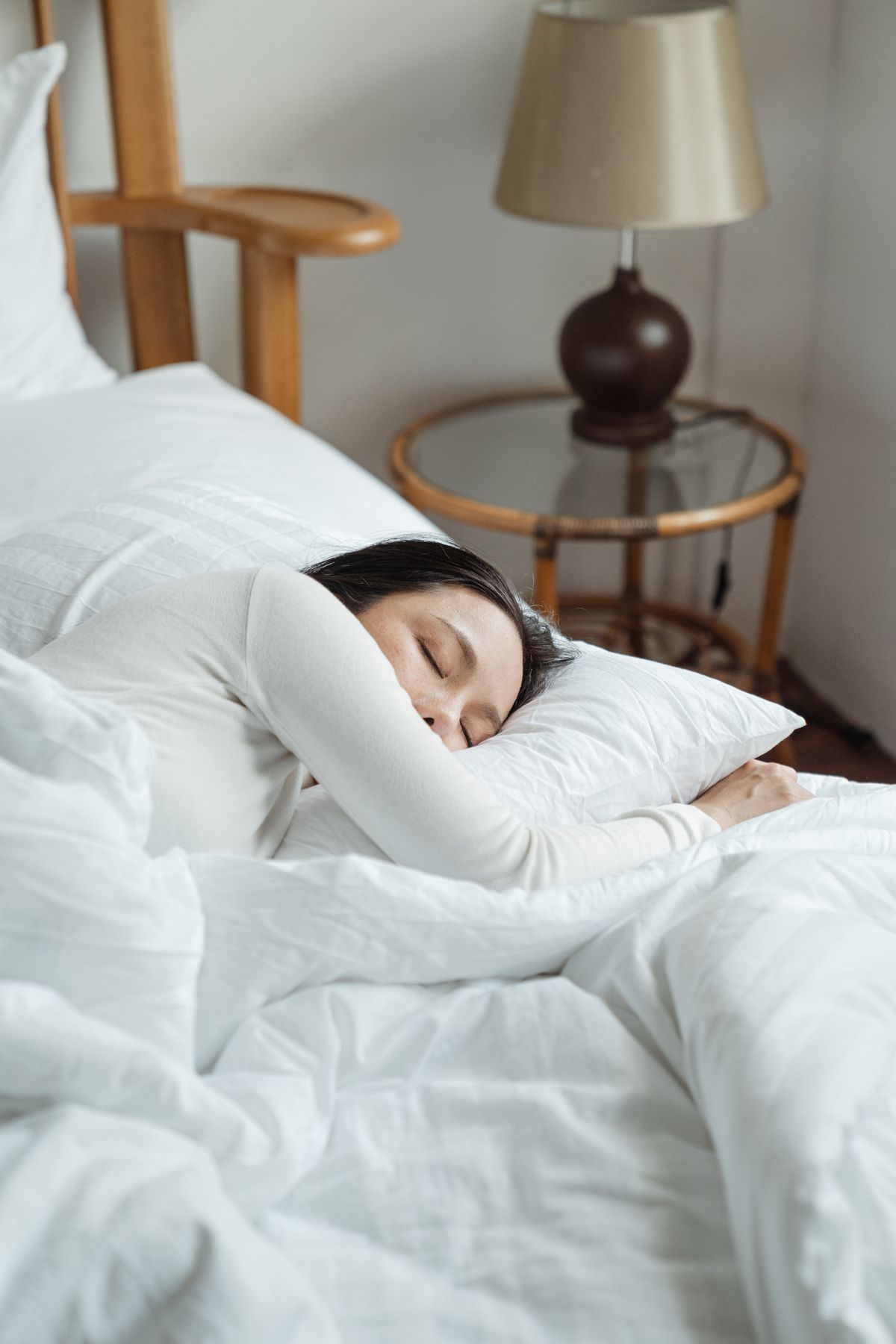
Recommended Positions for Side, Back and Stomach Sleepers
There is no single correct way to sleep. The aim is a position that keeps your spine level and lets you actually relax. Here is where to start, depending on how you naturally rest.
If You Sleep on Your Side
Side sleeping is comfortable for many people with back and joint pain. The key is a pillow between your knees.
- Draw your knees up a little toward your chest, into a soft, relaxed bend.
- Place a firm pillow between your knees so your top leg does not drag your hip and lower spine out of line.
- Keep your head pillow high enough to fill the gap between your shoulder and ear, so your neck stays level.
This small adjustment stops your upper leg from rotating your pelvis forward, which eases the pull on your lower back and hips.
If You Sleep on Your Back
Back sleeping places very little pressure on the spine when it is supported properly. The trick is to protect the natural curve of your lower back.
- Slide a pillow under your knees so your legs rest in a gentle bend rather than lying flat.
- Choose a head pillow that keeps your chin neither tipped up nor pressed toward your chest.
- If your lower back still feels hollow, a small rolled towel tucked under your waist can offer light support.
If You Sleep on Your Stomach
Stomach sleeping is the position most likely to aggravate back pain, because it flattens the spine's natural curve and turns your neck to one side for hours. If it is your long-standing habit, be gentle with yourself rather than forcing an overnight change.
- Place a slim pillow under your hips and lower stomach to reduce the arch in your lower back.
- Use a very thin head pillow, or none, to keep your neck closer to neutral.
- Over time, try settling onto your side with a knee pillow, which many people find becomes comfortable with practice.
Using Pillows for Alignment and Pressure Relief
Pillows are quiet, inexpensive tools, and they do more than cushion your head. Used well, they hold your body in a neutral line and lift pressure off the joints that ache.
Think of alignment as keeping your head, neck, spine and hips in one soft, level line, whatever position you are in. A few gentle principles help:
- Fill the gaps. Wherever your body leaves a space above the mattress, such as under the knees or between the knees, a pillow there prevents your spine from sagging or twisting to compensate.
- Mind your head height. Too high or too flat a pillow tips your neck out of line, and tension there can travel down your back.
- Adjust, do not endure. If you wake sore in the same spot, treat it as information. Shift a pillow, change its thickness, and notice what your body prefers.
Stiff hips, sore knees and tender shoulders all respond to the same idea: support the joint so it is not bearing weight at an awkward angle. If stiffness and brain fog are already part of your mornings, a kinder sleep setup is one of the simplest places to lighten the load.
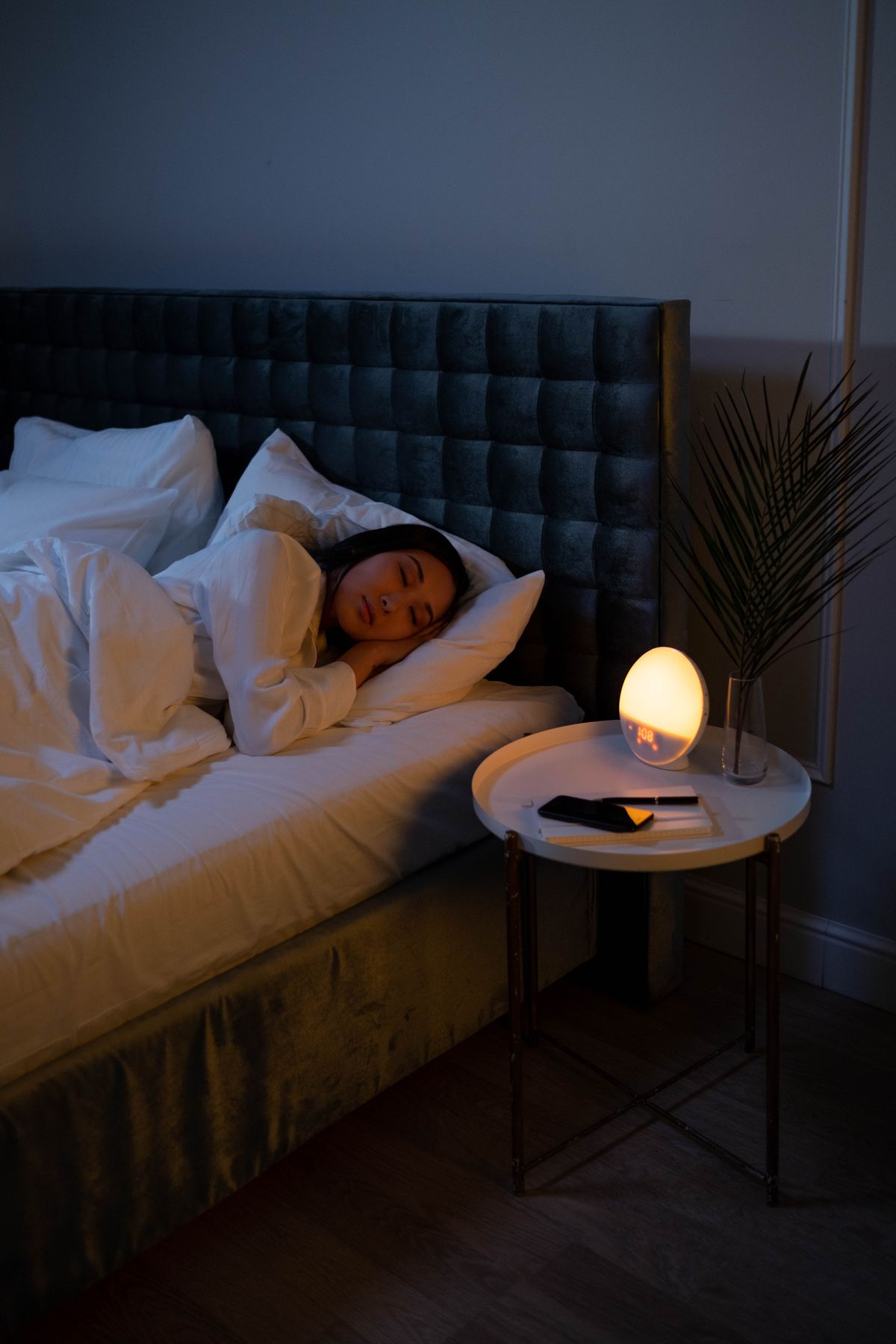
Building a Wind-Down Routine That Eases Nighttime Pain
How you spend the hour before bed shapes how your body settles once you lie down. When your nervous system is wound tight, pain tends to feel sharper, so a calm transition into sleep is part of the treatment, not a luxury.
A gentle wind-down might look like this:
- Dim the lights early. Softer light signals your body that rest is coming and helps your mind slow down.
- Move gently, then rest. A few minutes of slow, restorative stretching can release the day's tension before you lie flat.
- Steady your breath. Slow breathing, or a quiet moment of dhikr and istighfar, can soften the grip of a racing mind and ease muscle tension with it.
- Set your pillows before you are tired. Arrange your knee pillow and head support in advance so you are not twisting around to fix them half asleep.
For many Muslim women, the rhythm of salah already offers natural pauses in the day. Protecting your rest the same way, with intention and gentleness, honours the body Allah entrusted to you. If daytime prayer itself has become painful, you may find comfort in these gentle adjustments for praying salah with joint pain, so that worship stays a source of ease rather than strain.
Small, repeatable shifts tend to outlast grand plans. One pillow adjustment and five slow breaths, done most nights, will serve you better than a perfect routine you cannot keep.
When Persistent Night Pain Warrants Medical Advice
Positioning and routine help with the ordinary aches of a long day, but they are not meant to mask pain that is trying to tell you something. Please speak with a doctor or qualified professional if you notice any of the following:
- Pain that regularly wakes you from sleep or steadily gets worse.
- Numbness, tingling or weakness in your legs.
- Back pain alongside fever, unexplained weight loss, or problems with bladder or bowel control.
- Pain that does not ease at all with rest or gentle movement.
Seeking help is not a failure of patience or faith. It is part of caring for the body you have been given, and it sits comfortably within a trusting, hopeful approach to living with illness. If the emotional and spiritual weight feels heavy too, our faith-based pain management support for Muslim women is here to walk alongside you, always as a companion to your medical care rather than a replacement for it.
Tonight, choose one thing: a pillow between your knees, a dimmed lamp, or three slow breaths before you lie down. Let that be enough. Rest is not a reward you have to earn by doing everything right, and even one gentle change is a kindness your body will feel.