Chronic pain and marriage can live together, and your relationship does not have to shrink to fit your condition. With shared understanding, honest words, and small adjustments, closeness survives the hard days and sometimes deepens through them.
If you are reading this during a flare, or after another evening where pain spoke louder than you did, take a breath first. The ache you carry is real, and so is the weight it places on the person beside you. You are not failing your marriage by being unwell. You are being asked to love, and be loved, in a harder season than you planned for.
This strain is widely shared. In 2023, 24.3 percent of U.S. adults lived with chronic pain, up from 20.4 percent in 2016 (CDC National Center for Health Statistics, Data Brief No. 518, 2024). You are far from alone in trying to keep a relationship tender while your body makes demands of its own.
How Chronic Pain and Marriage Reshape Roles and Expectations
Chronic pain often rewrites the quiet agreements a marriage runs on. In 2023, 8.5 percent of U.S. adults had high-impact chronic pain, meaning pain severe enough to limit daily life or work, according to the same CDC National Center for Health Statistics data brief. When that level of pain enters a home, who cooks, who lifts, who carries the children, and who earns can all shift overnight.
These shifts are rarely discussed out loud. One of you may take on more without being asked. The other may feel sidelined from tasks they once did with ease. Both of you can end up grieving a version of the marriage you expected, without ever naming the loss.
Let yourself acknowledge that grief gently. The woman who used to carry the shopping, chase the toddler, or stand for long stretches in the kitchen is still you. Your worth was never measured in those tasks. In Islam, your value rests with Allah, not with how much you can lift.
A small practice helps here: name the change rather than absorb it quietly. Try saying, "Carrying the laundry upstairs flares my back now, so I need us to rethink that one." Naming a limit is not complaint. It is information your spouse can act on.
Communicating Needs Without Guilt or Resentment
Clear, early communication is the single most protective habit for a marriage touched by chronic pain. Guilt and resentment both grow in silence, when needs go unspoken until they spill out as frustration. Naming a need gently, before you hit your limit, keeps both partners on the same side.
Guilt whispers that asking makes you a burden. Resentment builds when you keep giving past your capacity and feel unseen. Both feelings are human. Neither has to run the conversation.
Try a simple shape for hard requests: describe, need, feeling. "My knees are bad today. I need to sit for the next hour. I feel frustrated that I can't help bathe the kids right now." Your spouse hears the fact, the request, and the emotion without having to guess.
It helps to separate the pain from the person. Your spouse is not the pain, and neither are you. You are two people facing it together. When you can, invite rather than demand: "Would you be able to take the morning routine this week?" leaves room for partnership.
Our finding: In coaching conversations at The Chronic Shift, women often describe the first honest, guilt-free request to their spouse as the moment the marriage started feeling like a team again, long before the pain itself changed.
If invisible symptoms make this harder, because your spouse cannot see what you feel, our guide on how to explain invisible illness to your family offers gentle language you can borrow.
Keeping Emotional Closeness During Flares
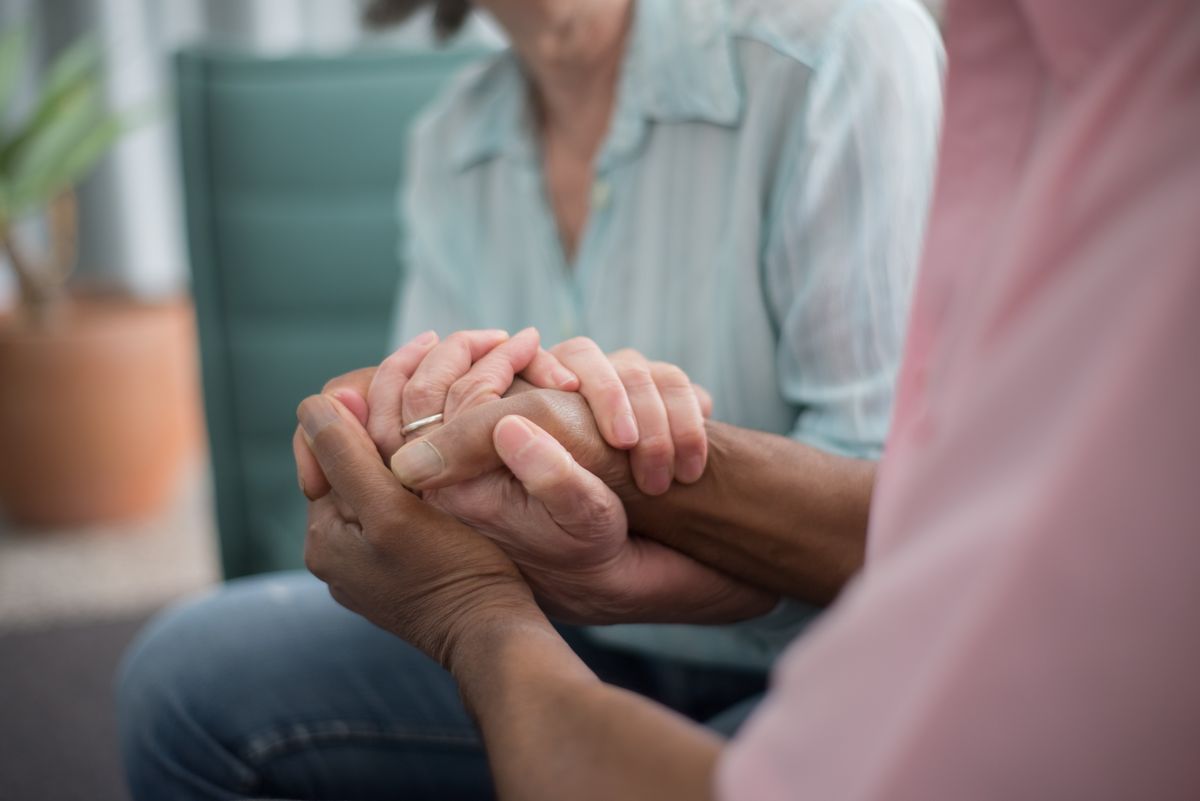
Emotional closeness does not need a good pain day to survive. During a flare, lower the bar for connection rather than letting it disappear. A held hand, a shared dua, or a few honest words can keep the thread between you intact when activity is not possible.
Flares shrink your world. You may cancel plans, retreat to a dark room, or go quiet because speaking takes energy you do not have. Your spouse can misread that silence as distance or disinterest, when it is really depletion.
A short, honest signal bridges the gap. Agree on a simple phrase for the worst days, something like, "I'm here, I just can't do much right now." It tells your spouse you still want them close, even when you cannot show it the usual way.
Closeness in a flare can be very small and still count. Praying side by side when you are able. Lying together while they read aloud. A hand on your shoulder during salah you perform sitting down. When you prepare for flares in advance, keeping a small survival kit ready, your spouse knows how to help instead of hovering helplessly.
What does your marriage need most on a bad day: space, or presence? The answer may differ each time, and asking it kindly is itself a form of closeness.

Involving Your Spouse in Your Care Plan
Inviting your spouse into your care turns pain from a solo burden into a shared responsibility. When a partner understands the plan, the triggers, and the pacing, they move from anxious bystander to active teammate. That shared knowledge steadies the whole household.
Many women carry the mental load of chronic illness alone: tracking symptoms, managing appointments, remembering what helps. That load is heavy, and it leaves your spouse out of a story they are living too. Let them in on the practical details.
Share the concrete things. Which movements flare your joints. What a good pacing day looks like. What a flare needs from them, whether that is quiet, a warm compress, help with the children, or simply patience. Small, specific knowledge beats vague worry every time.
There is a gendered reality worth naming here. One long-term study of 2,701 marriages found a 6 percent higher probability of divorce when wives became ill, while a husband's illness did not raise that risk (University of Michigan Institute for Social Research, Journal of Health and Social Behavior, 2015). That gap is not destiny. It is a reminder to build mutual care deliberately, so an ill wife is supported rather than quietly carrying more.
A note from Aiza: When I stopped protecting my husband from the hard details and started actually explaining my pain, he stopped guessing wrong. The relief of being understood, even on days nothing could be fixed, changed how we faced flares together.
This is where support beyond the two of you can ease the pressure. At The Chronic Shift, our coaching and courses help Muslim women build a care plan they can share with a spouse, blending functional nutrition, Acceptance and Commitment Therapy, mindfulness, and restorative movement through a compassionate Islamic lens. Coaching complements your medical care. It never replaces it.
Protecting Intimacy and Connection With Compassion
Intimacy can be protected when you let it mean more than physical ability. Pain changes what feels possible in the bedroom and beyond, and treating closeness as a wide, flexible thing keeps tenderness alive. Touch, affection, and quiet presence are all real forms of intimacy.
This is a tender subject, and often an unspoken one. Pain, fatigue, and medication can all dampen desire or make physical closeness difficult. Silence around it breeds hurt and assumption on both sides.
Speak about it with the same honesty you bring to the rest of your care. What feels good can change by the day, and saying so is kindness, not rejection. "I'd love to be close tonight, but my back needs it gentle" keeps the door open rather than closing it.
Redefine connection generously. Holding hands as you fall asleep. A long hug. Sitting close while you talk through the day. Making dua for each other. These threads of warmth hold a marriage even through seasons when physical intimacy is limited.
Protect your emotional connection too, because it feeds everything else. The quiet companionship of faith, of praying together and trusting Allah's mercy through a hard season, can draw you closer in ways pain cannot touch. Treat your marriage as a place of mercy, for both of you.
A Gentle Way Forward
Pick one small conversation to have this week. Not a summit about everything, just one honest sentence: a need you have been swallowing, a way your spouse could help, or something tender you have been missing. Say it gently, and let it be a beginning.
Your marriage does not need to be pain-free to be loving. It needs honesty, shared care, and the willingness to keep reaching for each other on the hard days. If you would like structured, faith-conscious support in building that care plan together, The Chronic Shift is here to walk alongside you. May Allah grant you both ease, patience, and nearness through every season.
Sources
- CDC National Center for Health Statistics, Data Brief No. 518 (Chronic Pain Among Adults, United States, 2019 to 2023), retrieved 2026-11-18, https://www.cdc.gov/nchs/products/databriefs/db518.htm
- University of Michigan Institute for Social Research, reporting on research published in the Journal of Health and Social Behavior (Karraker and Latham), retrieved 2026-11-18, https://www.sciencedaily.com/releases/2015/03/150304104156.htm