Tawakkul and chronic pain can live in the same heart at the same time. You can trust Allah completely while still taking your medication, booking the next appointment, and resting when your body asks you to. Trust does not mean giving up on care. It means doing your part with sincerity and leaving the outcome, including whether relief comes and when, in the hands of the One who holds all of it.
If you live with chronic back or joint pain, you already know how heavy the waiting can feel. The uncertainty can press on your faith as much as the pain presses on your body. This piece offers a gentle look at what tawakkul really asks of you, and how it can become a source of steadiness rather than pressure.

What Does Tawakkul Mean While Still Seeking Treatment?
Tawakkul means trusting Allah with the result while actively taking the means He has provided. It is not passive. There is a well-known tradition in which a man asked the Prophet Muhammad (peace be upon him) whether he should tie his camel or rely on Allah, and the answer was to tie the camel and then trust. For you, tying the camel is your treatment plan.
So taking your prescribed medicine is tawakkul. Attending physiotherapy is tawakkul. Pacing your day so you do not trigger a flare is tawakkul. None of these choices compete with your trust in Allah. They are the very actions that trust asks of you, done calmly, without panic about the final outcome.
Seeking a remedy is encouraged in Islam, so there is no shame in needing help. Caring for your body is part of honouring the trust Allah placed in you, not a sign that your faith is weak.
A quiet reflection: what would it feel like to see your next appointment as an act of worship, rather than a reminder of what is still unresolved?
Releasing the Need to Control Your Healing Timeline
Much of the exhaustion of chronic pain comes from trying to control a timeline that was never yours to set. You may catch yourself bargaining, thinking that if you just do everything right, relief will arrive on schedule. When it does not, the disappointment can feel like failure. Tawakkul gently loosens that grip.
Releasing the timeline does not mean abandoning hope or stopping your care. It means accepting that the pace of healing, or of adjustment, sits with Allah. Your job is the effort today: the stretch you can manage, the meal that settles your gut, the dua you whisper. The result is not a test you can pass or fail.
This is where acceptance-based approaches and faith meet beautifully. Letting go of control over outcomes is a core idea in Acceptance and Commitment Therapy, and it echoes what tawakkul has taught for centuries. If daily pacing is a struggle, you may find our notes on pacing yourself to avoid flare-ups a practical place to start.
A note from Aiza: For a long time I measured good days and bad days against an imaginary finish line. The shift came when I stopped asking "when will this end" and started asking "what small thing can I offer today." The pain did not vanish, but the pressure eased.
Tawakkul and Chronic Pain: Finding Peace When Answers Feel Out of Reach
Peace in chronic illness rarely comes from finally getting answers. More often it grows from making room for the unknown without letting it swallow you. Pain carries a mental weight as well as a physical one. Around 40% of adults with chronic pain also experience clinically significant depression and anxiety, drawn from a large meta-analysis of 376 studies and over 347,000 people (Johns Hopkins Medicine / JAMA Network Open, 2025). That heaviness is real, and caring for your heart is not a luxury.
Tawakkul offers a place to set down the questions you cannot answer. Why me? Why now? Why no clear diagnosis? These questions are human and valid, and you are allowed to feel them. Trust does not silence them. It simply gives them somewhere to rest, in the mercy of Allah, so they do not run in loops all night.
When the mental load spikes, slowing your breath can steady both body and mind. A few rounds of slow, deep breathing can calm a racing heart during a flare or a sleepless hour, giving your trust somewhere to settle.
Daily Practices to Strengthen Trust in Allah
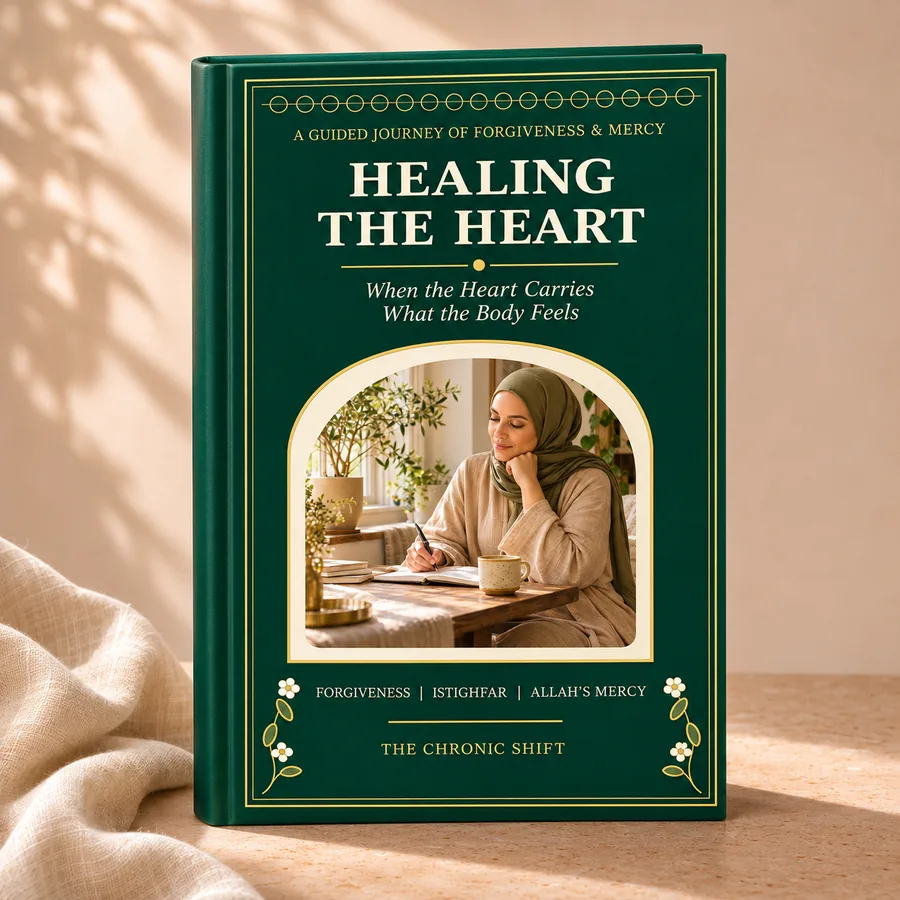
Trust is built through small, repeatable habits, not grand gestures reserved for good days. On a bad flare, you may not be able to stand for a long salah or read pages of Quran. That is where short practices become precious. A single line of istighfar, repeated slowly, still counts. One verse, read with attention, still nourishes.
Here are gentle anchors you can return to on any day, in any amount:
- Istighfar in small doses. Seeking Allah's forgiveness softens the heart and can calm a racing mind during pain.
- One dua before salah. A short, honest sentence to Allah about exactly how you feel, no formal wording required.
- Dhikr while resting. Remembrance of Allah carried on the breath, so worship continues even when movement does not.
- A single verse of reflection. Depth over length, letting one ayah accompany you through the day.
Consistency matters far more than length here. If prayer itself has become physically hard, adapting your posture, praying while seated, or shortening your standing can honour both your worship and your body. Remember too that Allah knows your limits better than you do, and He does not burden a soul beyond its capacity.
Holding Hope and Reality Together
You can hope for relief and accept your current reality at the same time. These two are not enemies. Hope keeps you taking your means: the appointments, the nutrition, the gentle movement. Acceptance keeps you from being crushed when a hard day arrives anyway. Tawakkul is the thread that holds both, trusting Allah with a future you cannot see while living honestly in the body you have today.
This balance is tender work, and you do not have to do it alone. Faith-based coaching can hold space for the spiritual, emotional, and physical weight together. At The Chronic Shift, support blends functional nutrition, acceptance-based tools, restorative movement, and an Islamic lens, always as a companion to your medical care and never a replacement for it. If that feels like the kind of company you have been looking for, our overview of faith-based pain management support for Muslim women is a soft place to begin.
One concrete next step: tonight, before you sleep, choose just one of the daily anchors above and commit to it for a single week. Not a cure, not a fix. Just one small act of trust, offered honestly to Allah, repeated gently. That is where tawakkul grows, one quiet day at a time.