When your lower back aches, slow and gentle movement is usually kinder than staying still all day. A short set of gentle stretches for lower back pain, done on a mat or a chair at home, can loosen tight muscles, calm the nervous system, and help you feel a little more at ease in your body. None of this promises to erase your pain, and that is okay. The goal here is more room to move, pray, and go about your day with a bit less stiffness holding you back.
Lower back pain is one of the most common struggles people carry. The World Health Organization reports that low back pain affected 619 million people globally in 2020, and describes it as the single leading cause of disability worldwide. (World Health Organization) So if your back has been letting you know it is there, you are far from alone.
Why gentle movement helps rather than harms a sore back
It can feel counterintuitive. Your back hurts, so surely rest is the safest choice? For short term soreness, long spells of bed rest tend to leave muscles stiffer and weaker, not better. The UK's NHS guidance for back pain advises people to stay active and continue with daily activities, and to avoid staying in bed for long periods. (NHS)
Movement brings blood flow to tired tissues, keeps joints mobile, and sends a quiet signal to your body that it is safe to move. Large reviews of exercise for ongoing low back pain support this, finding that people who do gentle exercise therapy tend to report meaningfully less pain than those who do nothing at all.
The key word is gentle. We are not talking about pushing through pain or chasing a deep stretch. We are talking about soft, within-comfort movement that respects the limits your body sets today.

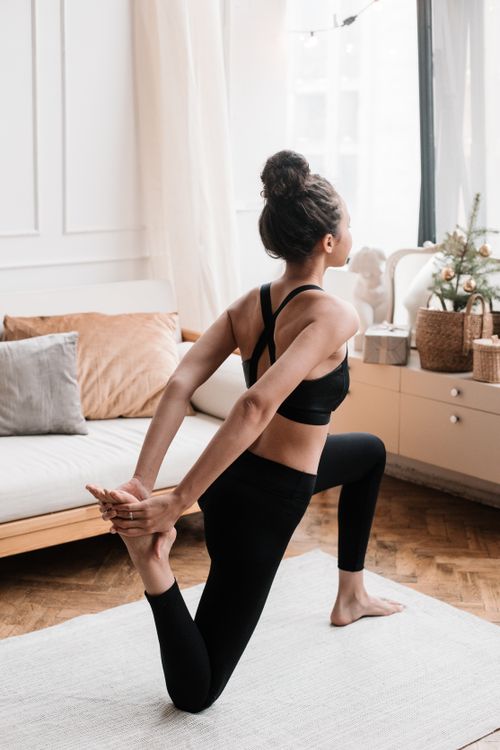
Five gentle stretches for lower back pain, on a mat or chair
You do not need special equipment. A mat, a towel, or a sturdy chair is enough. Wear something you can move in comfortably and modestly, and give yourself a warm, quiet space. If getting down to the floor is hard, every stretch below has a seated option.
Move into each position slowly. You are looking for a mild, pleasant stretch, never a strong pull. Do two or three of these to start, and build from there.
1. Knee hugs (or seated knee lifts)
Lie on your back with knees bent. Gently draw one knee toward your chest, holding behind the thigh, and let your lower back soften into the floor. Hold for a few slow breaths, then switch sides.
Seated option: sitting tall in a chair, lift one knee a little toward your chest and hold the back of the thigh. This eases tension across the lower back without any floor work.
2. Pelvic tilts
Lie with knees bent and feet flat. Slowly flatten your lower back toward the floor by tilting your pelvis, then release. This is a small movement, more a gentle rocking than a big stretch. It wakes up the deep muscles that support your spine.
Seated option: sitting on a chair, roll your pelvis forward and back a few times, feeling your lower back round and arch slightly.
3. Cat and cow (or seated version)
On your hands and knees, slowly arch your back up like a stretching cat, then let it dip as you lift your chest. Let your breath lead the movement. This mobilises the whole spine in a soft, flowing way.
Seated option: hands on your knees, round your back as you breathe out, then open your chest as you breathe in.
4. Gentle seated twist
Sit tall on a chair or on the floor. Place one hand on the opposite knee and slowly turn your upper body, looking over your shoulder. Keep it light and stop well before any pinch. Hold for a breath or two, then unwind and switch sides.
5. Child's pose (or forward fold in a chair)
From hands and knees, sink your hips back toward your heels, arms stretched forward, and rest your forehead down. This is a resting shape as much as a stretch, and many people find it soothing.
Seated option: sitting in a chair, let your upper body fold softly forward over your thighs, arms and head heavy. Come up slowly.
This gentle, floor-light approach works well first thing in the morning, when many people feel most locked up and stiff.
How to breathe and pace yourself through each movement
Your breath is a quiet tool that tells your body it is safe. Try breathing in slowly through your nose, then out gently through your mouth, letting each exhale carry a little tension away. Moving into a stretch on the out-breath often lets you ease a touch further without force.
A few simple cues:
- Hold each stretch for roughly 15 to 30 seconds, or less if that is plenty.
- Never hold your breath. If you notice you are gripping, pause and breathe.
- Move slowly in and slowly out. The transitions matter as much as the hold.
- Stop at a mild stretch, not a strong pull.
Pacing is about honouring your energy, not emptying it. Some days you may do all five stretches. Other days, one knee hug and a few slow breaths is a complete and worthy practice. If you tend to overdo things on good days and pay for it later, you may find our guide on pacing yourself to avoid flare-ups a steadying read.
A short pause here. If you link these few minutes to something you already do, like settling before salah or winding down at night, the practice tends to stick far more gently than willpower alone.
Warning signs that mean you should stop and rest
Gentle movement should feel soothing or neutral, not alarming. Please stop and rest, and check in with a healthcare professional, if you notice any of the following:
- Sharp, shooting, or electric pain during or after a stretch.
- Pain that spreads down a leg, or numbness and tingling in your legs or feet.
- Weakness in a leg, or a leg that feels like it might give way.
- Pain that is clearly getting worse rather than easing.
Some signs need urgent care. Seek help right away if you lose control of your bladder or bowels, feel numbness around your back passage or genitals, or have back pain alongside a fever or unexplained weight loss.
None of this is meant to frighten you. It is simply about listening to your body with respect. Coaching and self-care practices sit alongside medical care, never in place of it. At The Chronic Shift, support is designed to complement the guidance of your own doctors, so you are never choosing between faith-centred care and proper medical attention.
Building a sustainable daily stretching habit
A habit that lasts is a small one. Rather than aiming for a long session that you dread, pick two or three stretches and attach them to a moment that already exists in your day. Many women find that a few quiet minutes after Fajr, or before bed, becomes a gentle anchor.
Here are a few ways to make it stick:
- Keep it tiny. Two minutes done daily beats twenty minutes done rarely.
- Pair it with an anchor, like making wudu, boiling the kettle, or sitting on your prayer mat.
- Be kind on the hard days. A single stretch still counts, and resting is sometimes the wise choice.
- Notice what helps. Jotting a quick note about how your back felt can reveal patterns over time.
There is a spiritual softness in this too. Caring gently for the body you have been given is its own quiet act of gratitude, and so is asking Allah for ease on the days movement feels heavy. Little by little, with mercy toward yourself, these small shifts add up.
Your next step can be very small. Choose one stretch from the list above, decide the moment you will do it tomorrow, and let that be enough for now. Your back does not need a perfect routine. It needs a kind, consistent friend, and that friend is you.