Chronic pain coaching for women is a structured partnership that helps you manage pain day to day, set reachable goals, and build a plan for flare-ups. You keep your medical care; coaching adds the practical skills, pacing, and accountability that clinical appointments rarely have time to cover. If you are weighing providers, this guide explains what a coach does, how faith-conscious support changes the work for Muslim women, and the questions that separate a strong coach from a weak one.
What Is Chronic Pain Coaching and How Is It Different?
Chronic pain coaching is a goal-focused, skills-based process that helps you live more fully alongside persistent pain. In 2023, roughly one in four US adults had chronic pain, and 8.5% had pain that frequently limited work or daily life, according to the CDC's National Center for Health Statistics (CDC/NCHS, Chronic Pain and High-impact Chronic Pain in U.S. Adults, 2023, 2023). Coaching meets that daily burden where it lives: in your routines.
A coach works in a different lane from a therapist or a physical therapist, and that distinction matters when you are choosing where to spend money and energy.
- A therapist treats mental health conditions such as depression or trauma.
- A physical therapist diagnoses and prescribes clinical exercise and manual treatment.
- A chronic pain coach helps you apply self-management skills, pacing, and flare planning toward goals you define.
Coaching sits alongside your medical team. A good coach stays inside that scope, reinforces what your clinicians recommend, and refers you back to them when a symptom needs review. Think of the coach as the person who helps you carry the plan through ordinary weeks, not the person who writes the prescription.
Why Chronic Pain Coaching for Women Needs to Be Specific
Women carry a heavier chronic pain load, and coaching that ignores that fact misses the mark. In 2023, women in the United States were more likely to report chronic pain than men, 25.4% versus 23.2%, and more likely to report high-impact chronic pain, 9.6% versus 7.3%, in the same CDC/NCHS data. Those gaps shape how coaching should be built.
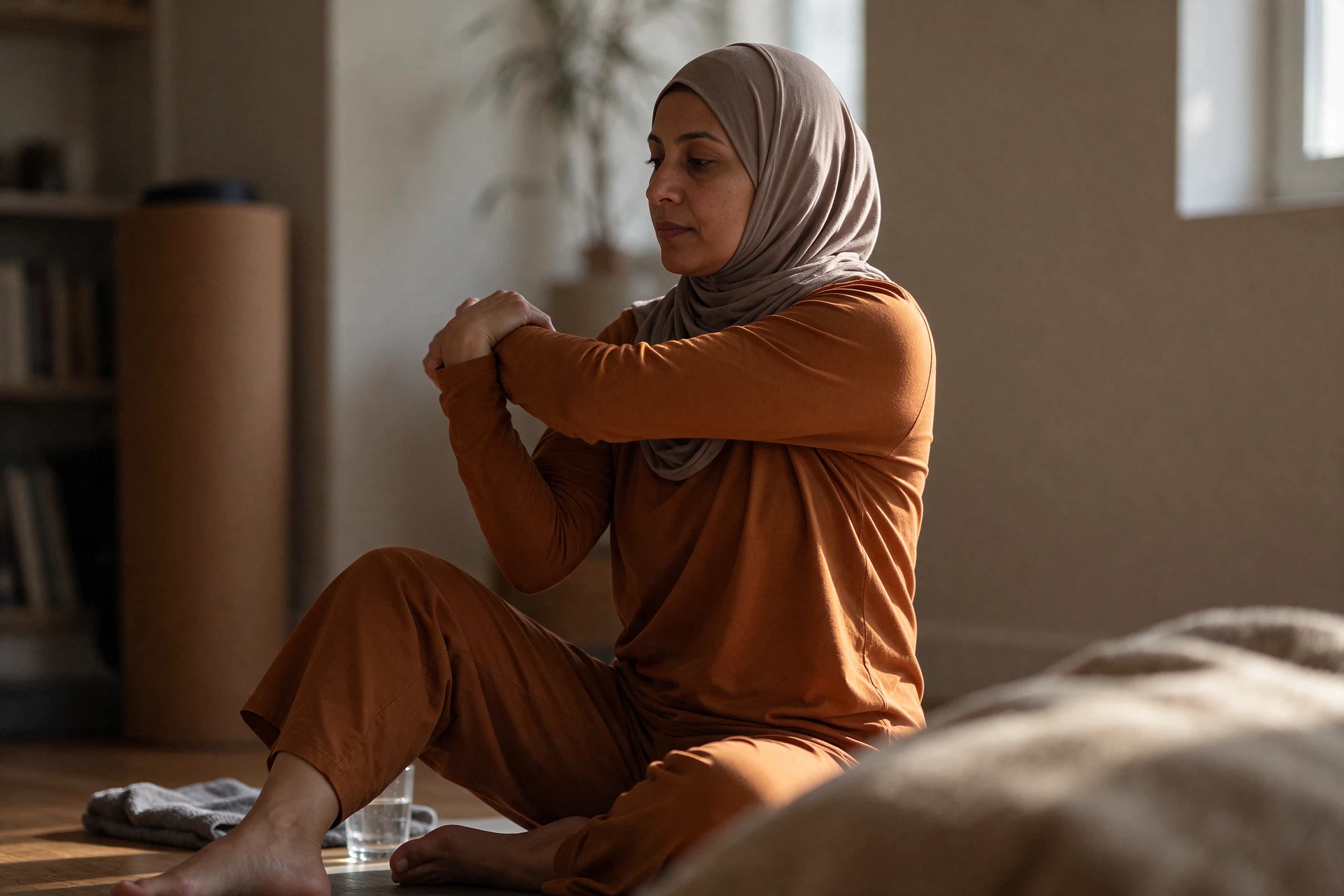
Back and joint pain are a large part of that picture. Low back pain alone affected 619 million people globally in 2020 and is projected to reach 843 million cases by 2050 as populations grow and age, per the World Health Organization (WHO, Low back pain fact sheet, 2024). For many women, that pain lands on top of caregiving, work, and household demands that rarely pause for a flare.
Coaching designed for women accounts for those competing demands. It builds pacing around real schedules, plans flares around responsibilities that cannot simply stop, and treats rest as a strategy rather than a failure. Generic programs that assume unlimited recovery time tend to set women up to fall behind.
How Faith-Conscious Coaching Supports Muslim Women
Faith-conscious coaching treats your deen as part of the plan, not an obstacle to work around. For a Muslim woman, daily prayer, wudu, fasting, and worship are fixed points in the week. A coach who understands that builds pacing and flare strategies around those rhythms instead of asking you to choose between your body and your practice.
That looks practical in the details. Positioning and movement can be adapted so that salah stays accessible during a flare. Rest can be framed through the lens of patience and trust rather than guilt. Energy planning can account for Ramadan, late-night worship, or community obligations that a secular program would never see.
The point is coherence. When your pain plan and your spiritual life pull in the same direction, you are far more likely to keep going. This is where The Chronic Shift focuses, blending pain-management coaching for back and joint pain with spiritual grounding so that managing your body and honoring your faith reinforce each other.
What Does a Typical Coaching Journey Look Like?
A coaching journey moves in stages, from understanding your situation to handing you tools you keep for good. Pain self-management training works. A 2025 peer-reviewed study of women with chronic pain found that self-management training significantly improved resilience, quality of life, and treatment adherence, with effects that held at a three-month follow-up (Effectiveness of Pain Self-Management Training on Resilience, Quality of Life, and Adherence Treatment in Women with Chronic Pain, 2025). A well-run journey is how those gains get built.
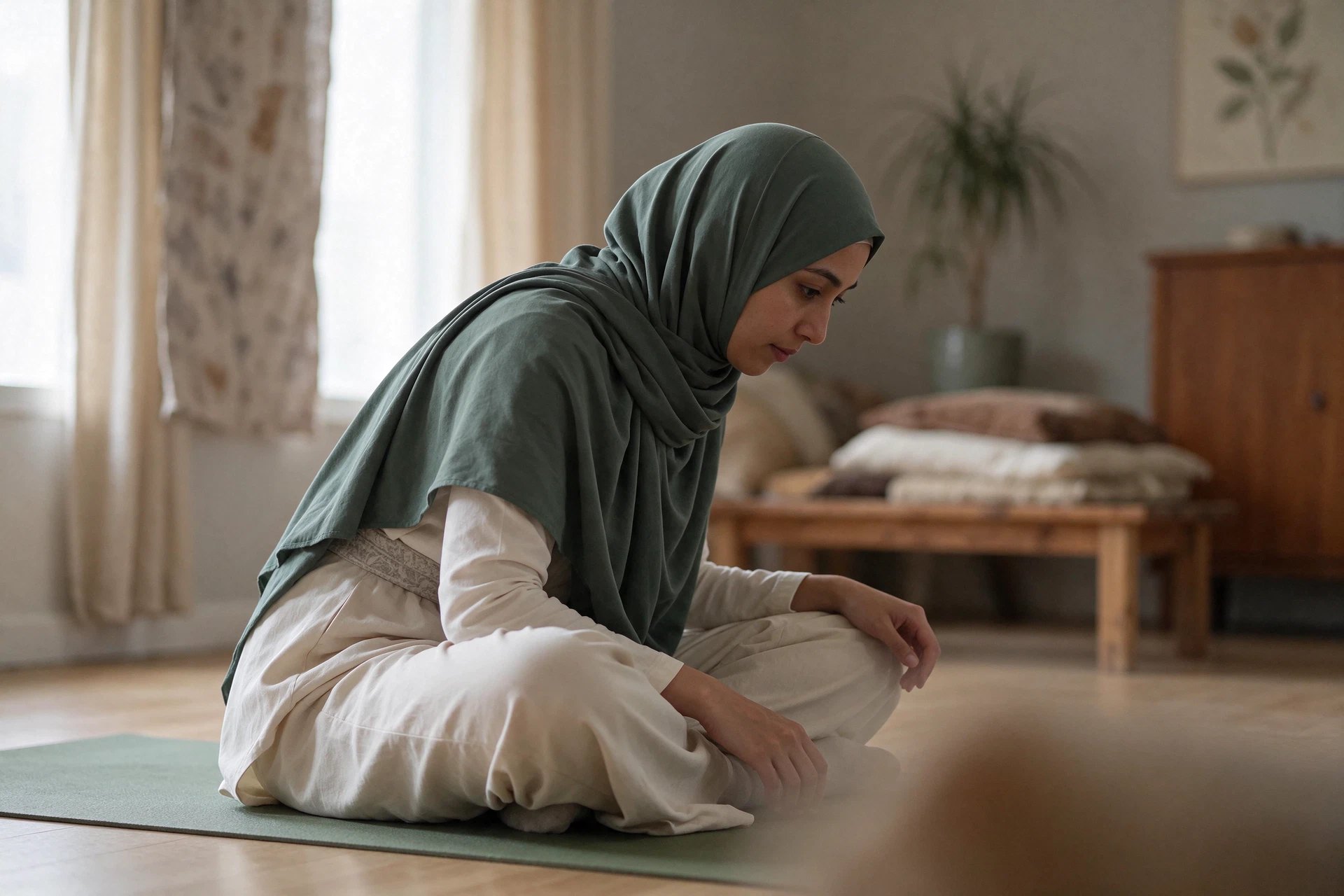
Here is what the stages usually include.
- Intake and assessment. You map your pain history, triggers, current treatments, daily routine, and goals. This is where a faith-conscious coach learns how your worship and your week fit together.
- Baseline and goal-setting. You and your coach set specific, measurable goals tied to your own starting point, such as sitting through a family meal or walking a set distance without a two-day crash.
- Skill-building. You learn pacing, activity scheduling, gentle movement habits, stress and sleep strategies, and how to respond to early warning signs.
- Flare planning. You write a concrete plan for bad days: what to do, what to pause, how to protect salah, and when to contact your medical team.
- Review and independence. You track progress against your baseline, adjust the plan, and leave with tools you can run on your own.
A good journey ends with you depending on the plan, not on the coach.
What Questions Should You Ask Before Choosing a Coach?
The right questions protect your time and money, especially since coaching is unregulated and quality varies widely. The World Health Organization describes low back pain as the single leading cause of disability worldwide, the condition for which the greatest number of people may benefit from rehabilitation. With stakes that high, a vague answer is a reason to keep looking.
Ask a prospective coach:
- What is your training and experience with my condition? Back and joint pain have specific patterns. General wellness coaching is not the same thing.
- How do you handle flares? You want a coach who plans for bad days rather than one who only coaches on good ones.
- How do you measure progress? Look for measurement against your own baseline, not generic promises of a pain-free life.
- Do you understand my faith commitments? For Muslim women, a coach who already works within an Islamic framework saves you from constant translation.
A confident, specific answer to each of these tells you the coach works within a real scope and respects both your health and your values.
Choosing Your Next Step
Chronic pain will not vanish on a schedule, but what you can do despite it can grow with the right support. The clearest next move is to shortlist two or three coaches, run the questions above, and notice who plans for flares and respects your faith instead of talking around it. If you are a Muslim woman managing back or joint pain, start a conversation with The Chronic Shift and ask how a faith-conscious plan would fit your week. The goal is a plan you can carry on your own, through ordinary days and hard ones alike.