If you are carrying chronic pain largely on your own, a chronic pain support community can lighten that load, not by curing anything, but by surrounding you with people who understand. You do not have to explain from scratch, defend how you feel, or pretend you are fine when you are not.
That matters more than it sounds. Pain is exhausting on its own. Carrying it in silence, while everyone around you seems to move through life easily, is a second kind of ache. This article is about that quieter struggle, and about the gentle, real ways connection and faith can help you feel held again.
How Isolation Deepens the Burden of Chronic Pain
Chronic pain narrows your world slowly. First you cancel the big outings. Then the small ones. Soon a short message feels like too much, and the people who used to fill your days drift a little further away. You are not imagining it, and you are not weak for feeling it.
You are also far from alone in this. In 2023, 24.3% of U.S. adults had chronic pain, and 8.5% had chronic pain that frequently limited their daily life or work, according to the U.S. Centers for Disease Control and Prevention. Women reported higher rates than men, at 25.4% compared with 23.2%. That is roughly one in four adults living with something many of them rarely talk about.
Isolation does not only feel bad. It weighs on the body too. The U.S. Surgeon General has warned that loneliness raises the risk of premature death by nearly 30%, with health effects comparable to smoking up to 15 cigarettes a day, as reported by STAT News. Around half of adults report experiencing loneliness. When pain and isolation stack on top of each other, each one makes the other harder to carry.

A quiet weight you may recognise
Maybe you have found yourself saying "I'm okay" when you are not. Maybe you have smiled through a gathering while your back screamed, then came home and cried. Maybe brain fog and fatigue have made you doubt your own memory of how capable you used to be.
None of that means something is wrong with you. It means you have been coping alone for a long time, and that is a heavy way to live.
The Healing Power of Shared Experience and Faith
Something softens when you meet another woman who simply gets it. You can say "it was a bad pain day" and she nods, because she has had them too. There is no performance, no long backstory, just recognition. That recognition is a form of relief.
Shared experience also gently reframes the emotional side of pain. Roughly 40% of adults with chronic pain experience depression or anxiety symptoms, according to a 2025 systematic review of 376 studies led by Johns Hopkins Medicine, which found pooled rates of 39.3% for depression and 40.2% for anxiety (Johns Hopkins Medicine). Those heavy feelings are common companions to pain, not a personal failing. Hearing another woman name them out loud can make them feel less frightening and less lonely.
For many Muslim women, faith adds another layer of comfort that a general group may not hold space for. You might want to speak about leaning on salah when you can manage it, about tawakkul on the hardest days, about trusting in Allah's mercy when your body will not cooperate. In a space that shares your deen, you do not have to translate any of this. If trusting Allah through difficult seasons is something you are sitting with, our reflection on tawakkul and trusting Allah through chronic pain may be a gentle companion.
A small note from Aiza: on my heaviest days, what helped was not a grand solution. It was one sister who messaged to say she understood, and reminded me that my worth was never tied to how much I could do.
Faith and connection do not promise an end to pain. They make more room around it, so that movement, meaning, and relationship can still breathe.
Where to Find Safe, Understanding Communities
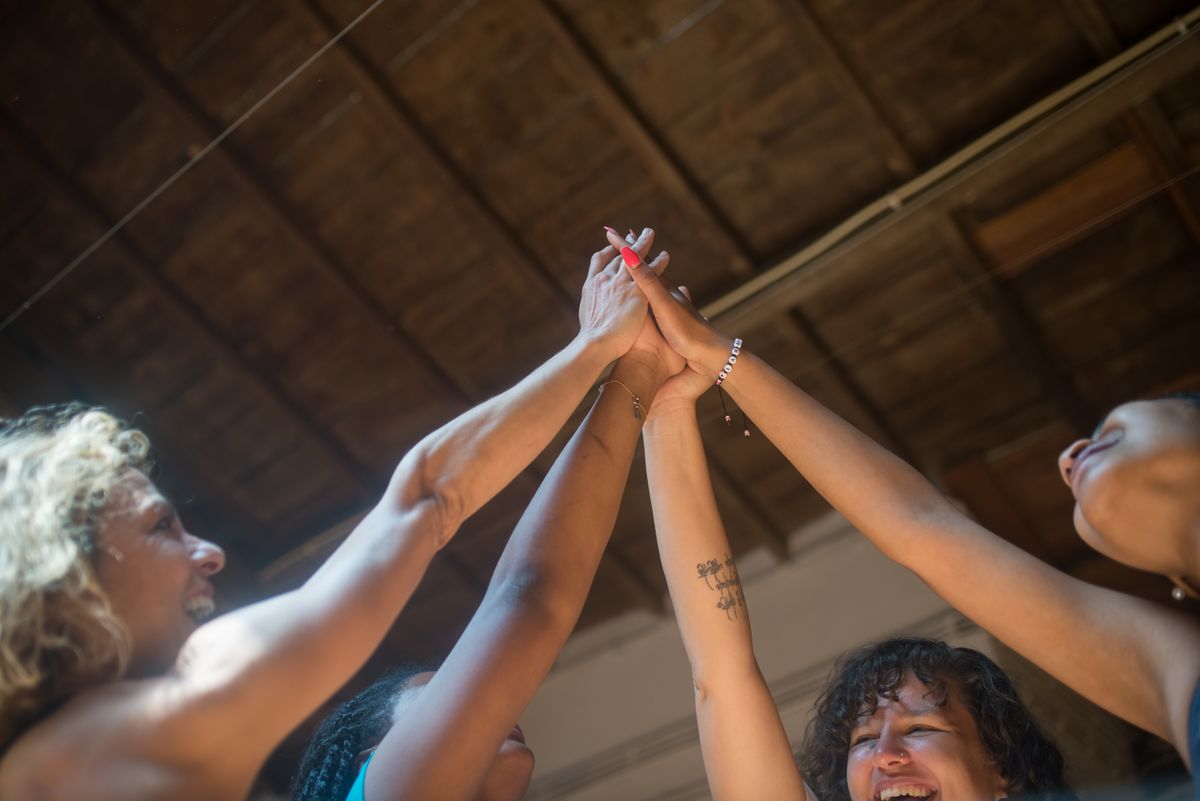
A safe community is one where you can be honest about your limits without judgement, and leave when your body asks you to. You do not need a large network. A few understanding people can be enough to change how a hard week feels.
Here are gentle places to look.
- Condition-specific groups. Online and local groups for back pain, joint pain, fibromyalgia, or chronic fatigue connect you with people who understand the practical daily reality, from flare days to pacing.
- Faith communities. Sisters at the masjid, halaqah circles, or trusted online Muslim women's spaces can hold the spiritual weight of pain alongside the physical.
- Small private circles. Sometimes the safest community is three or four women in a quiet group chat who check in without pressure.
- Structured support with guidance. Group coaching and peer spaces designed around chronic pain give you both connection and gentle, evidence-informed tools.
As you explore, trust your comfort. A good space feels calm, not performative. It honours rest, respects your pain, and never shames you for the days you cannot show up.
A gentle caution
Not every group will suit you, and that is okay. If a space feels competitive, full of miracle cures, or dismissive of medical care, you are allowed to step back. Real support complements the care of your doctors and specialists. It never replaces it. If talking to your medical team feels hard, our guide on how to talk to your doctor about chronic pain can help you prepare.
How The Chronic Shift Builds a Chronic Pain Support Community
The Chronic Shift was built around a simple belief: no Muslim woman should have to carry chronic back and joint pain alone. Its chronic pain support community brings women together through group coaching, shared learning, and one-to-one guidance, all held within a compassionate Islamic lens.
Rather than chasing cures, the focus is on making more room for life alongside pain. That means blending functional nutrition, Acceptance and Commitment Therapy, mindfulness, and restorative movement with faith-conscious support, so you are cared for as a whole person, not just a symptom. The aim is small, sustainable shifts, the kind you can actually keep on the days when energy is low.
Here, you can speak openly about fatigue, brain fog, motherhood, and prayer in the same breath. You can show up slowly. You can rest without explaining yourself. The sisterhood is designed to meet you where you are, honouring both your condition and your deen, and always alongside your medical care rather than in place of it.
If you are also navigating self-care on painful days, you may find comfort in our practical guide to faith-based self-care practices for painful days.
Taking the First Step Toward Connection
Reaching out can feel like the hardest part, especially when fatigue and pain have made you withdraw. So make the first step small enough that it does not frighten you. Connection grows from tiny, repeatable moments, not from one brave leap.
Try one of these this week.
- Send a single message. Reach out to one woman who might understand, with a simple "today has been a hard pain day." You do not need to explain everything.
- Observe quietly first. Join an online group and just read for a while. You are allowed to stay in the background until you feel ready.
- Show up once. Attend a single session or gathering with no pressure to return. One visit is a complete and worthy step.
- Make a gentle dua. Ask Allah to soften the path toward people who understand you. Sometimes the first movement toward community is a quiet one of the heart.
You do not have to do this perfectly, and you do not have to do it all at once. If you would like a warm, faith-conscious space built for women living with chronic back and joint pain, The Chronic Shift community is here whenever you feel ready to take that small step. Start with the one that feels kindest to you today, and let that be enough.