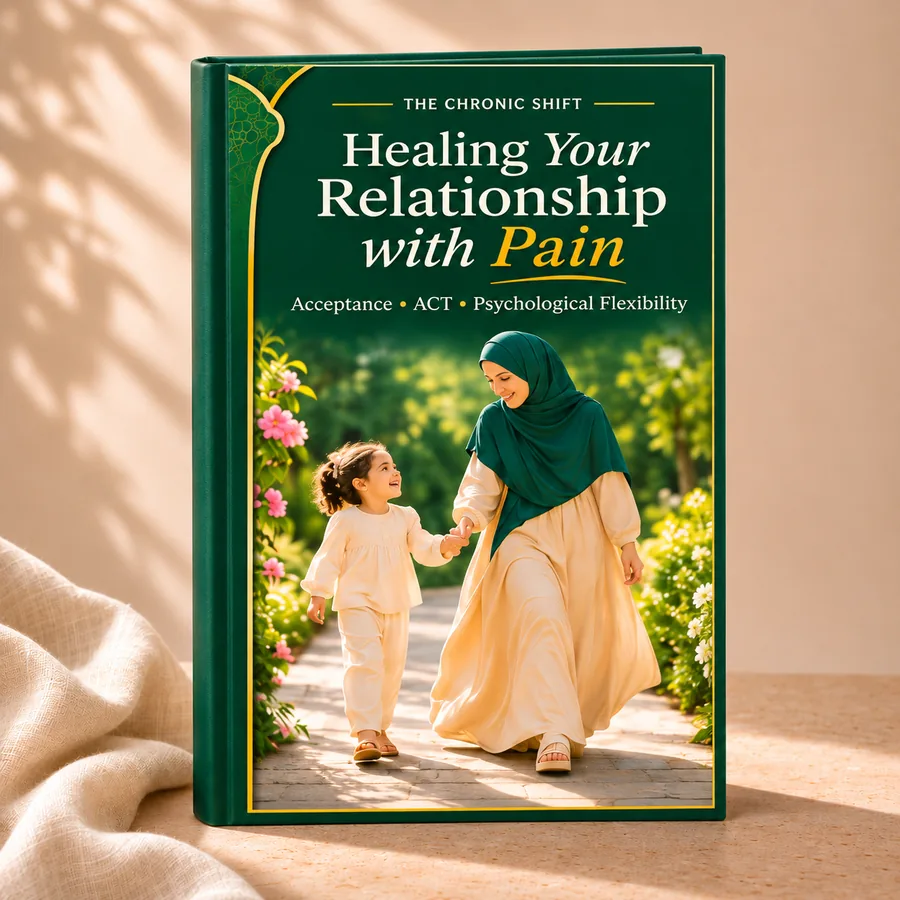
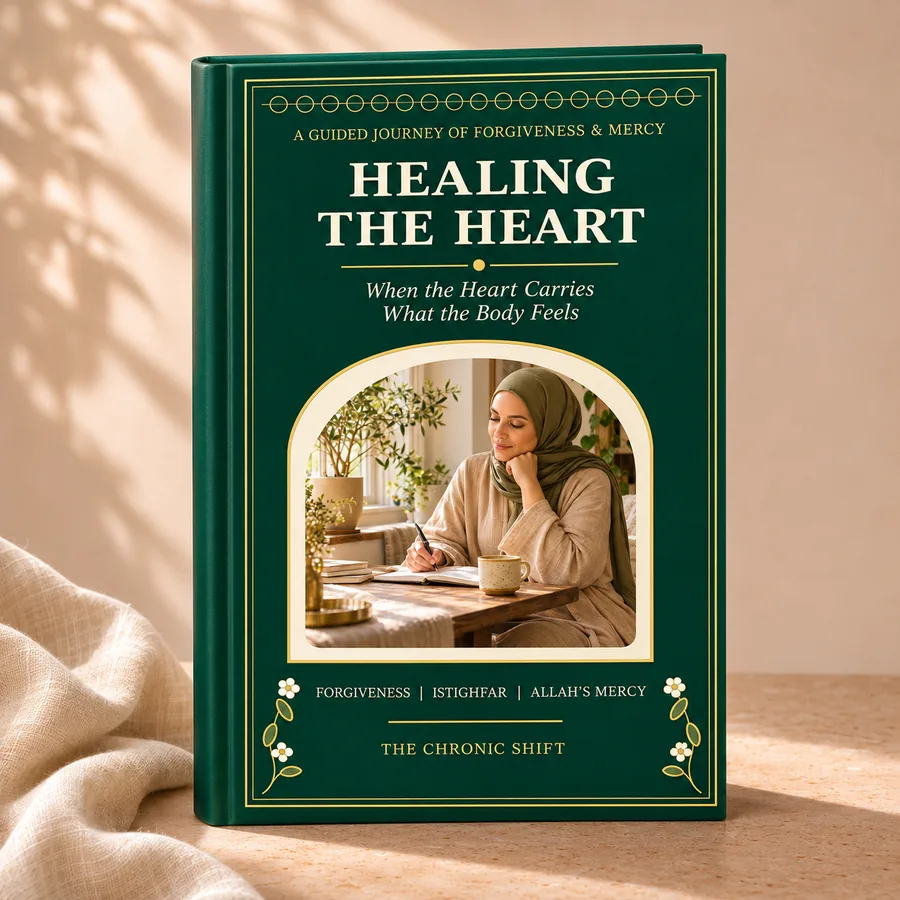
Sabr and chronic illness are not opposites, and sabr is not a demand to suffer quietly or smile through pain. In Islam, sabr is active steadfastness: the choice to keep turning toward Allah even while your back aches, your joints stiffen, and your energy runs thin. This is an Islamic perspective on illness that makes room for both your faith and your honesty.
If you have ever felt that being a "good" Muslim means hiding how much you hurt, this is for you. You can hold firmly to your deen and still grieve what your body can no longer do.
Sabr and Chronic Illness: What Does Sabr Really Mean Beyond Endurance?
Sabr is patience with purpose, not passive endurance. The Arabic root carries the sense of holding firm and restraining the self, so sabr is something you choose moment by moment, not a feeling you wait to arrive. It lets you cry, ask for help, and still trust Allah.
Many of us were taught a thinner version: grit your teeth and say nothing. That reading leaves women ashamed of their own tears. Real sabr has room for lament. The Prophet Yaqub (peace be upon him) wept until his sight dimmed, and the Quran still calls his patience beautiful.
A reflective question worth sitting with: what would change if you stopped treating your pain as a failure of faith?
So sabr is not the absence of struggle. It is faith that keeps standing while the struggle is real. That distinction matters enormously when the struggle lasts for years.
How Do the Quran and Sunnah Frame Illness and Reward?
The Quran ties patience to mercy in plain words. In Surah al-Baqarah (2:155-157), Allah describes testing people with fear, loss, and hardship, then gives glad tidings to the patient, "those who, when disaster strikes them, say: Indeed we belong to Allah, and indeed to Him we will return." The verse promises them blessings and mercy from their Lord.
The Sunnah reframes sickness as something that lightens your record rather than marks you as abandoned. In a hadith recorded in Sahih al-Bukhari and Sahih Muslim, the Prophet (peace be upon him) said that no fatigue, disease, sorrow, or even the prick of a thorn befalls a Muslim without Allah expiating some of their sins through it.
That teaching does not make the pain smaller. It gives the pain meaning. Your sleepless, aching night is not wasted in the sight of Allah, even when it feels like nothing to the people around you.
The Quran also keeps hardship next to hope. Surah al-Sharh (94:5-6) repeats that with hardship comes ease, a line many women return to when a flare finally lifts.
Can You Reframe Pain Without Dismissing Real Suffering?
Reframing pain does not mean denying it, and the scale of chronic pain shows why honesty matters. Low back pain alone affected 619 million people in 2020 and is projected to reach 843 million cases by 2050, and it is already the single leading cause of disability worldwide (World Health Organization, 2023). Your experience is shared by hundreds of millions.
So when faith invites you to find meaning in hardship, it is not asking you to pretend the hardship is small. Women are also more likely than men to carry chronic pain through daily life, often alongside fatigue and brain fog that no one else can see.
Healthy reframing sounds like this: the pain is real, and it is not the whole story of my worth. You can say "this is hard" and "Allah is near" in the same breath. One truth does not cancel the other.
A note from Aiza: in my own hardest seasons, the shift that helped was not forcing gratitude. It was letting the complaint and the dua live side by side.
What Are Practical Ways to Nurture Patience on Hard Days?
On a hard day, sabr becomes small and concrete rather than grand. The most sustainable practice is to shrink the goal until it fits inside your energy: one verse instead of a page, dhikr from bed instead of a long qiyam, istighfar whispered while you rest. Small acts, repeated, build real steadfastness.
Try a few gentle anchors:
- Name it honestly to Allah. Dua is allowed to include your complaint, not only your thanks.
- Lower the bar for worship. Sitting salah and shortened routines still count, and they protect your connection on flare days.
- Use istighfar as rhythm. Repeating "astaghfirullah" gives the restless mind somewhere soft to land.
- Mark one mercy. A warm drink, a child's laugh, a pain level slightly lower than yesterday.
For practical adjustments to worship itself, our guide on how to pray salah comfortably with joint pain walks through gentle, permissible options so prayer stays within reach.
Acceptance-based skills sit well alongside this. A 2024 meta-analysis of 21 randomised trials found that Acceptance and Commitment Therapy produced a medium improvement in pain acceptance and in everyday functioning for people with chronic pain (PLOS ONE, 2024). Accepting what you cannot control frees energy for what you still can do.
What is one act of worship you could make smaller, so you can keep doing it even on a bad day?
How Do You Balance Acceptance With Seeking Treatment?
Acceptance and treatment are partners, not rivals. The Prophetic tradition is clear that believers should seek remedies while trusting Allah, since for every illness a cure is sought. Sabr never means refusing care or ignoring a doctor. It means facing your condition without despair while you keep looking for relief.
That balance protects you from two traps: the guilt that says faith should be enough on its own, and the exhaustion of chasing a cure as if your worth depends on being fixed. You are allowed to pursue physiotherapy, nutrition changes, medication, and still make dua for shifa.
This is where structured, compassionate support helps. At The Chronic Shift, coaching blends functional nutrition, ACT, mindfulness, and restorative movement through an Islamic lens, always as a complement to your medical care and never a replacement for it. The aim is not to erase your pain but to help you make more room for movement, connection, and faith.
Acceptance is the ground you stand on. Seeking treatment is the step you take from there. Both are forms of sabr.
A Gentle Next Step
Pick one practice from this article and try it for the next three days: perhaps istighfar while you rest, or lowering the bar for one daily prayer so you never miss your connection with Allah. Notice what eases, even slightly. Sabr grows through small, repeated choices, not a single heroic effort, and you do not have to walk this road alone or without medical care. If you would value structured support that honours both your faith and your body, that is exactly the room The Chronic Shift was built to hold.