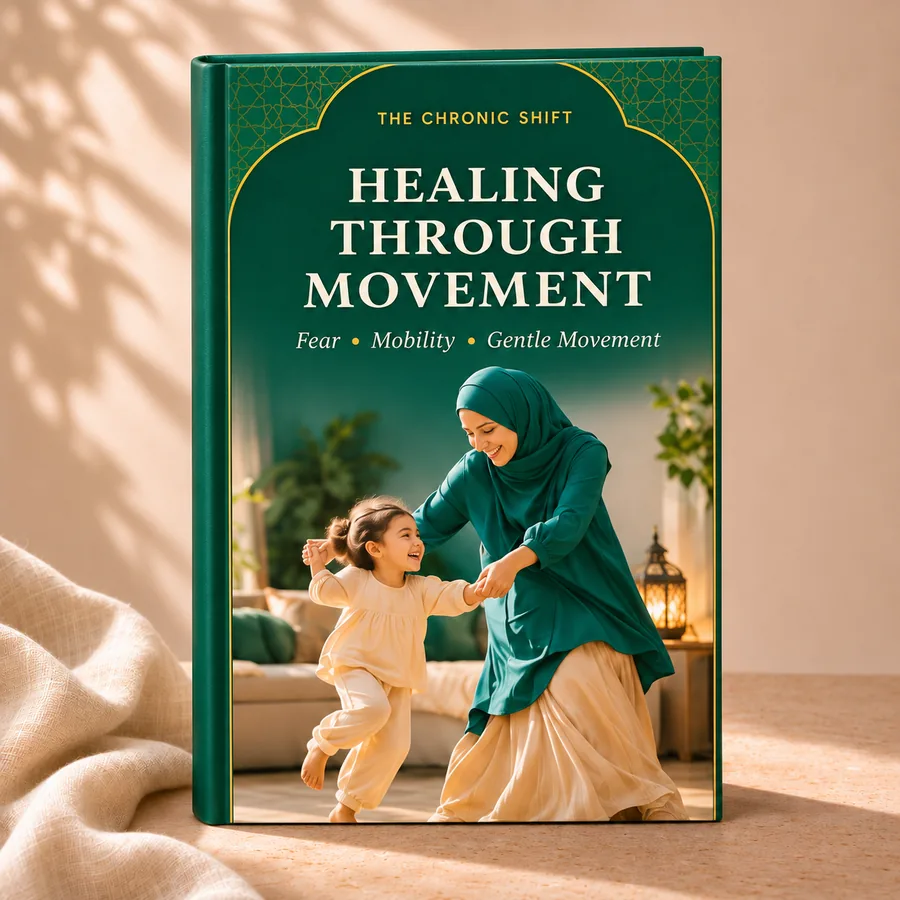
If your joints feel locked and heavy the moment you wake, a gentle morning routine for stiff joints can help loosen them before your feet touch the floor. Small, slow movements, a warm start before Fajr, and an early glass of water often ease that first-hour tightness so the day feels less daunting.
You are not imagining it, and you are not alone in it. Many women living with chronic back and joint pain wake to the same stiff, reluctant body each morning. This is a calm, bite-sized way to begin, offered with the understanding that some mornings will still be hard.
A note before we start: this routine is here to support you, not to replace your medical care. If something feels sharp, new, or worse than usual, please speak to your doctor.
Why Do Joints Feel Stiffest After Waking?
Joints tend to feel stiffest in the morning because they have been still for hours, and movement is what warms them back up. Overnight, you are not shifting position often, so fluid settles and the tissues around a joint tighten. A gentle start coaxes them loose again.
For many people with osteoarthritis, that stiffness eases within about half an hour. With inflammatory conditions like rheumatoid arthritis, it can linger longer and feel heavier. Long-lasting morning stiffness is one of the signs doctors look at, so it is always worth mentioning to your care team.
Does that first hour feel like the hardest part of your day? If so, the aim here is simple: give your joints a soft, unhurried signal that it is time to move. Cold weather can make that tightness worse, so a little extra warmth on winter mornings often helps.
Gentle In-Bed Stretches to Begin Your Morning Routine for Stiff Joints
The kindest place to begin is before you even stand. A few slow stretches while you are still lying down warm your joints gradually, so your first steps feel steadier and less of a shock. Think of it as waking the body up, not working it out.
Try these, moving only as far as feels comfortable:
- Ankle circles. Slowly rotate each foot a few times in each direction.
- Gentle knee hugs. Draw one knee softly toward your chest, hold for a breath, then release. Swap sides.
- Shoulder rolls. Roll your shoulders backward in small, easy circles.
- Finger spreads. Open and close your hands a few times to loosen stiff fingers.
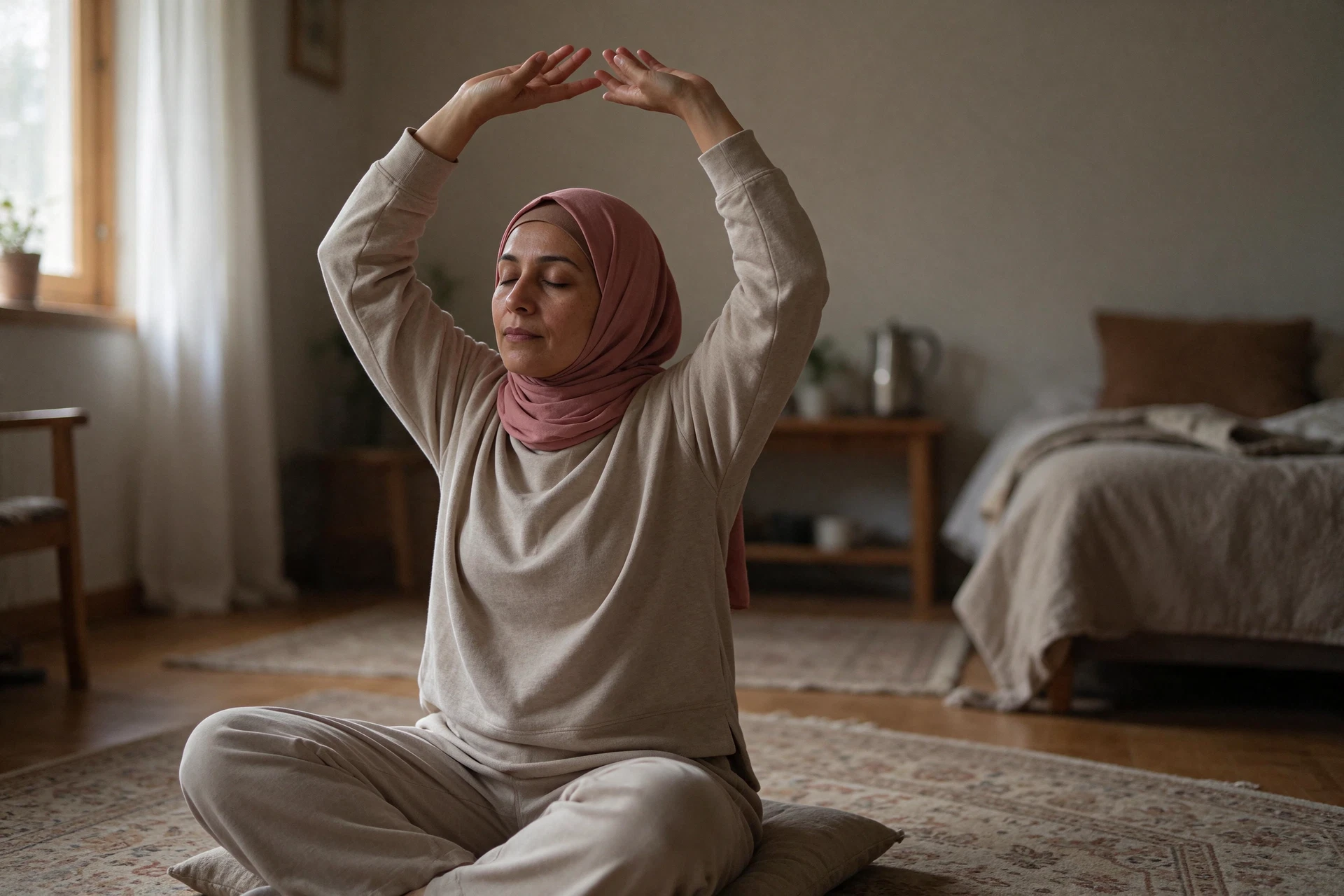
- A long, slow stretch. Reach your arms gently overhead and point your toes, like a cat waking from sleep.
Breathe slowly as you go. There is no need to push into pain. When I began doing this myself on the stiffest mornings, the point was never to stretch far; it was to greet the day gently before asking anything of my body. If mobility is very limited first thing, stay with seated and supported movements you can adapt to your own range.
Warming Up Before Fajr and Morning Tasks
A short warm-up before Fajr can make salah feel more comfortable, especially if standing, bending, or sitting down to prostrate usually catches you. Giving your joints a minute or two of gentle movement first means you are not asking cold, stiff muscles to move straight into prayer.
Once you are up, keep it small and steady:
- Walk slowly to the bathroom rather than rushing.
- Let warm water during wudu soothe stiff hands and wrists.
- Do a few gentle neck turns and shoulder rolls before you stand for salah.
NICE guidance on osteoarthritis notes that doing regular, consistent exercise, even when it may at first cause some discomfort, is still beneficial for your joints over time (NICE, Osteoarthritis: diagnosis and management (NG226), 2022). In other words, a little gentle stiffness as you begin does not mean you are doing harm.
If prayer movements are painful, you are allowed ease. Our guide on how to pray salah comfortably with joint pain walks through adaptations that honour both your worship and your limits. A warm compress on stiff joints before you begin can help too.
Hydration and Nutrition for Easier Mornings
What you drink and eat first thing can quietly shape how your joints feel. Your body has gone all night without water, and the cartilage that cushions your joints holds a great deal of fluid, so starting the day hydrated supports smoother movement. Keep a glass of water by your bed and sip it before you get up.
From there, a gentle, anti-inflammatory breakfast can help. You do not need strict rules or expensive foods. Small, steady choices matter more than perfection:
- Water first, before tea or coffee.
- Oats with berries, or dates and nuts, for slow-release energy.
- Oily fish, olive oil, and leafy greens across your meals.
- Warm drinks like ginger tea if they comfort you.
Halal-friendly, anti-inflammatory ingredients are easy to build into your week, and they fit naturally into the meals you already cook. None of this is about dieting or denial. It is about giving your body gentle support, one small choice at a time.
If brain fog and fatigue tend to cloud your mornings, a steady breakfast and early water can take the edge off both. Try not to skip food simply because you are stiff or tired. Even a small, warm plate gives your body something to work with, and it can make the first tasks of the day feel a little lighter.
Setting a Gentle, Realistic Pace for the Day Ahead
How you start shapes how you cope. Setting one small, realistic intention for the morning protects you from the trap of trying to do everything before the stiffness fully lifts. Pacing yourself early helps you avoid the boom-and-bust cycle that so often leads to a flare later.
Try choosing a single priority for the morning rather than a long list. Break bigger tasks into smaller pieces. Rest before you are exhausted, not after. If you tend to push hard on your better mornings, our guide to pacing yourself and avoiding flare-ups is worth keeping close.
There is a spiritual steadiness here too. A quiet moment of istighfar or a short dua as you begin can soften the morning, reminding you that ease comes from Allah and that your worth is not measured by how much you accomplish. Some mornings, simply showing up is enough.
This is the kind of gentle, whole-person approach The Chronic Shift is built around. Through self-paced courses, group coaching, and one-to-one support, we help Muslim women make more room for movement, faith, and daily life alongside chronic pain, always alongside your medical care, never instead of it.
If you do one thing after reading this, let it be the smallest thing: tomorrow, before you stand, try three slow ankle circles and one deep breath. Start there, and let the rest of the routine grow at its own kind pace.