When pain flares and your chest tightens with worry, a few slow breaths can be one of the kindest things you offer yourself. Breathing exercises for pain and anxiety work by gently settling your nervous system, so the fear and tension stacked on top of the pain begin to ease, even when the pain itself has not gone anywhere.
That distinction matters. Chronic back and joint pain is heavy enough on its own. The anxiety that rides along with it, the bracing, the dread of the next flare, the exhausting mental noise, often makes everything feel worse. Breathing gives you a small, portable way to turn the volume down on that second layer.
This is not a cure, and you deserve honesty about that. What follows are gentle, evidence-informed techniques you can try from a chair, a prayer mat, or your bed. Take what helps and leave the rest.
A note from Aiza: On my hardest days, I do not expect my breath to fix anything. I just want it to keep me company for a minute, so I feel a little less alone inside the pain.
How Breathing Shapes the Pain and Stress Response
Your body has two gears. One is the alert, revved-up state that helps you respond to danger. The other is the calmer, restful state that helps you settle and recover. Chronic pain tends to keep you stuck in the first gear, muscles guarded, mind racing, breath shallow and high in the chest.
Slow, deep breathing is one of the few levers you can reach for to shift toward that calmer gear. When you lengthen your out-breath and let your belly soften, you send your body a quiet signal that it is safe enough to ease off. The National Center for Complementary and Integrative Health notes that relaxation techniques, including deep breathing, can help with conditions such as anxiety and pain by encouraging this natural relaxation response.
Pain and anxiety also feed each other. The more anxious you feel, the more your body tenses and the louder pain can register. Breathing works on both at once, loosening the physical bracing while giving your anxious mind something steady to hold.
Simple Diaphragmatic Breathing You Can Try Now
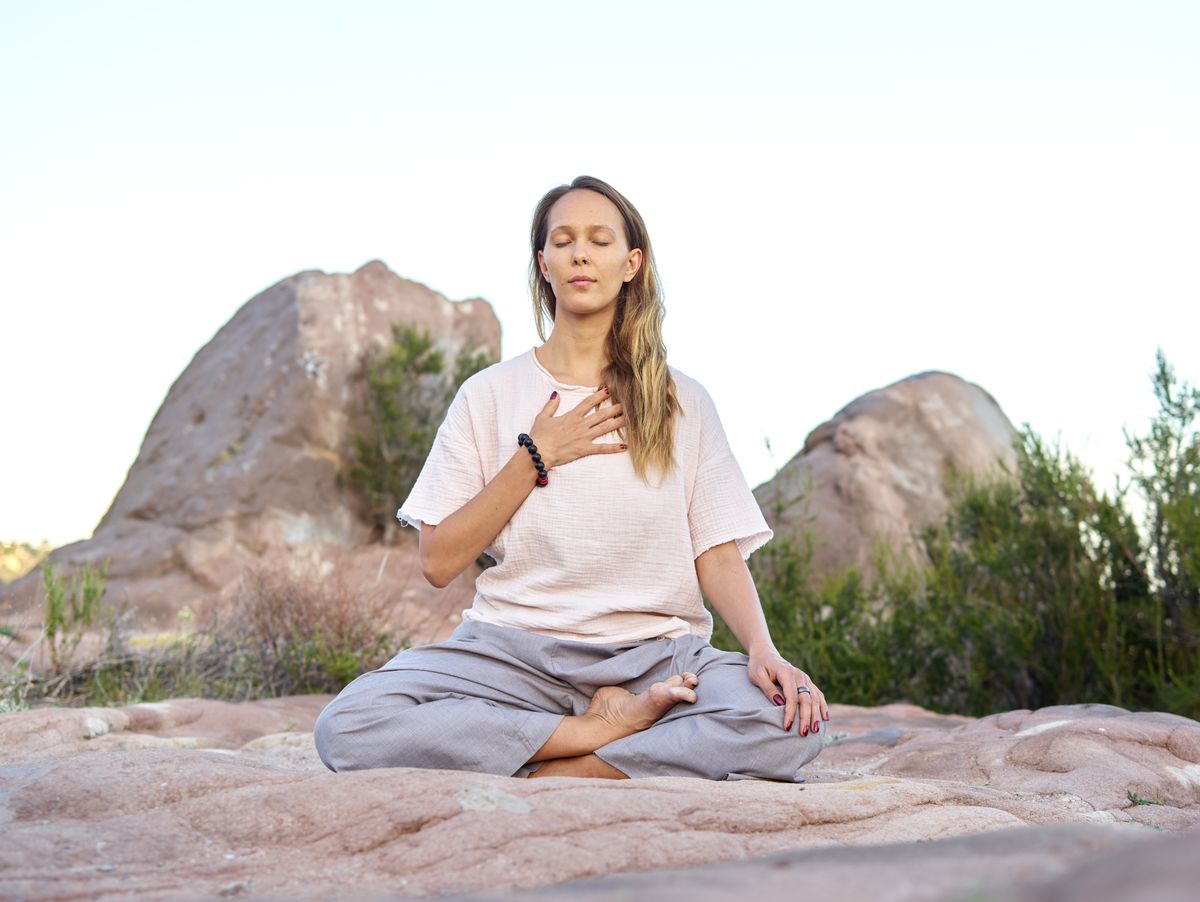
Diaphragmatic breathing, sometimes called belly breathing, is the foundation. Most of us breathe into the upper chest, especially when we hurt. The goal here is to let the breath drop lower, so your belly gently rises instead of your shoulders.
Here is a gentle way to begin:
- Settle into any position that hurts least. Sitting, lying propped on pillows, or resting your back against a wall are all fine.
- Rest one hand on your chest and one on your belly.
- Breathe in slowly through your nose for a count of about four, and feel the hand on your belly rise. The hand on your chest should stay fairly still.
- Let the breath out slowly through your mouth for a count of about six, feeling your belly fall.
- Repeat for a minute or two, with no straining and no judgment.
The longer out-breath is the part that soothes most, so do not worry about perfect counts. If four and six feel awkward, try three and five, or simply make your exhale a touch longer than your inhale.
If you feel dizzy or more anxious, that is a sign to slow down or stop. This should feel like a soft landing, never a struggle.
Pairing Breath With Dhikr for Deeper Calm
For many Muslim women, breathing becomes more meaningful when it carries remembrance. Instead of counting, you can let words of dhikr ride on your breath, so a calming exercise also becomes a quiet moment with Allah.
You might try:
- Breathing in slowly, then silently saying SubhanAllah as you breathe out.
- Seeking forgiveness with Astaghfirullah on each out-breath, letting istighfar soften both your heart and your shoulders.
- Resting in a short phrase like Hasbunallah when the worry feels heavy.
There is something grounding about turning your breath toward Him when your body feels out of your control. The rhythm steadies you, and the words remind you that you are held by a mercy far larger than this pain. If this speaks to you, our guide on dua and dhikr for comfort during chronic pain offers more phrases to lean on.
Let this stay gentle, not another duty to perform perfectly. Even one breath paired with one word is enough on a hard day.
Using Breathwork During Flares and Sleepless Nights
Flares and 3am wakefulness are when breathing often matters most, and also when it feels hardest to begin. The aim during these moments is not to breathe the pain away. It is to keep yourself from spiralling into panic on top of it.
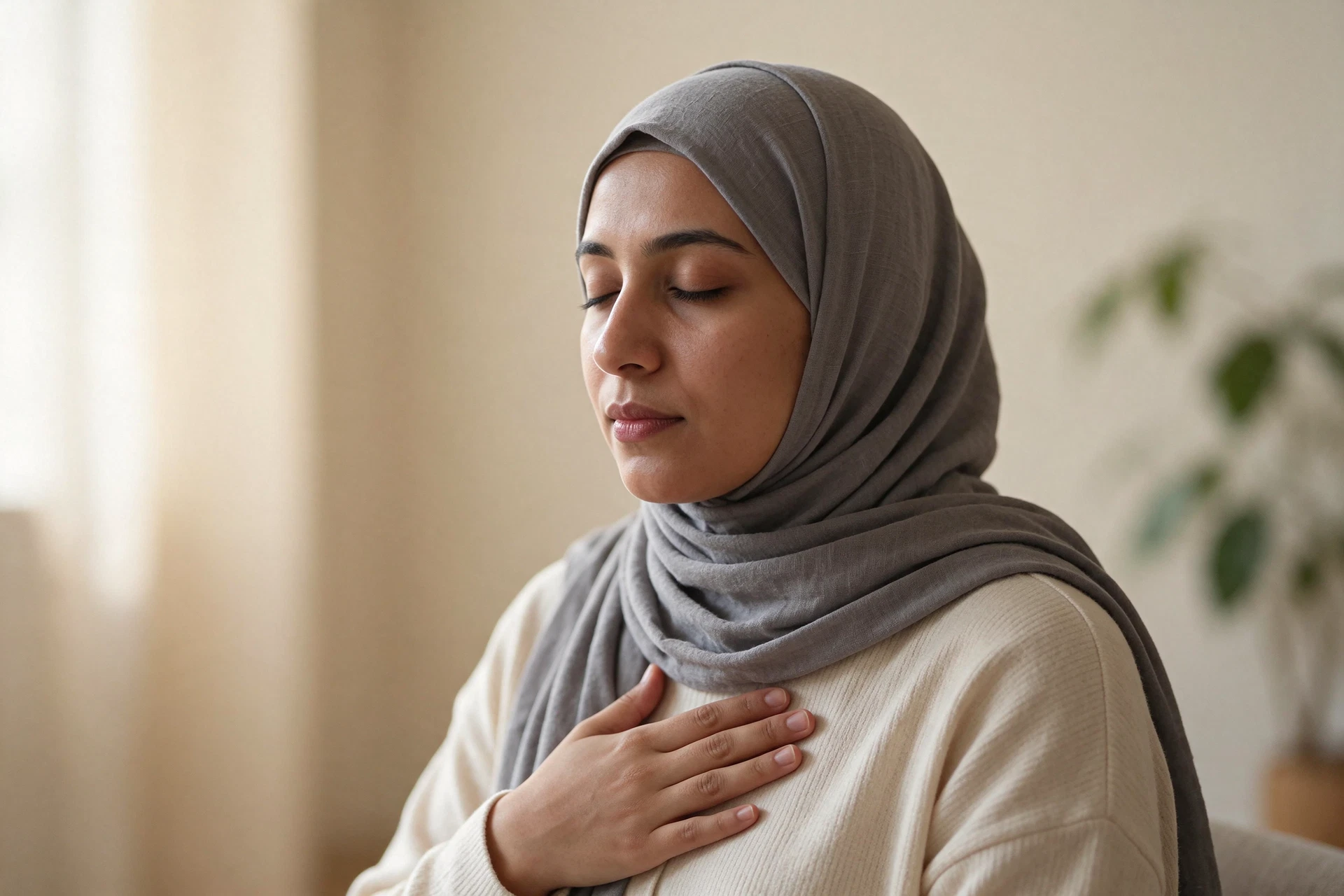
During a flare, give yourself full permission to stay still. Lie in whatever position eases the ache, close your eyes, and put all your attention on making each out-breath a little longer and softer than the one before. You are not fixing anything. You are simply riding the wave with a steadier breath.
On sleepless nights, pairing slow breathing with your body position can help you settle. Many women find that combining gentle breathwork with supportive positioning makes a real difference, and our notes on the best sleep positions to reduce back pain can help you set up for rest.
A soft reminder: if pain is severe, new, or changing, breathing is not a substitute for medical care. Reach out to your doctor. Breathwork sits alongside your treatment, not in place of it.
Building a Short Daily Practice That Sticks
The breathing you practise on calm days is what becomes available to you on hard ones. A tiny, regular habit beats an ambitious plan you cannot keep during a flare.
Keep it small enough to feel almost too easy:
- Anchor it to something you already do. A minute of belly breathing after you finish salah, or before you reach for your phone in the morning, removes the need to remember.
- Start with two minutes. You can always continue if it feels good, but two minutes is a real practice, not a failure.
- Let it be imperfect. Some days your mind will wander constantly. That is normal and still counts.
- Notice one small shift. Slightly looser shoulders or a quieter mind is worth acknowledging, so your body learns this is worth returning to.
What would it feel like to give yourself two unhurried minutes today, with nothing to prove?
If you would like gentle, faith-conscious support in building habits like this around your pain, this is the kind of small, sustainable shift we walk through together at The Chronic Shift, where coaching blends restorative practices with an Islamic lens, always alongside your medical care.
Your next step can be the smallest one. After your next salah, before you stand up, take three slow breaths with a longer out-breath, and let Astaghfirullah settle your heart on each one. That is enough to begin.