If stiff joints and a wish to stay fully covered have kept you from moving, you have far more options than you think. Hijab-friendly workouts are simply gentle, low-impact routines you can do at home, in loose clothing, at a pace your body sets. This guide walks you through why modest movement matters, which exercises are kind to stiff joints, and how to keep going without a gym or any pressure to push through pain.
Many of us carry the quiet belief that exercise means a busy studio, tight leggings, and movements that feel exposing. For a Muslim woman living with chronic back and joint pain, that picture can feel doubly out of reach. You deserve a gentler one.
Why Modest Movement Options Matter for Muslim Women
Chronic pain is common, and gentle movement is one of the kindest responses to it. In 2023, the CDC reported that 20.9% of US adults, about 51.6 million people, lived with chronic pain, and 6.9% had high-impact chronic pain that limited daily life (CDC, Chronic Pain Among Adults, United States, 2019-2021, 2023). You are not alone in this, and movement can still have a place.
For many Muslim women, the barrier is not only pain. It is finding a space where you can move while staying covered and comfortable, away from mixed-gender gyms or clothing that feels wrong. When those options are missing, movement quietly drops off the list.
That matters, because inactivity tends to make stiff joints feel stiffer. Modest, home-based routines remove the clothing and privacy worries, so the only thing left to manage is your pain and your pace. Both of those are things you can learn to work with gently.
There is a spiritual thread here too. Caring for the body you have been given is part of honouring Allah's trust, and gentle movement can sit alongside salah and daily rhythms rather than competing with them. If praying itself feels hard right now, our guide on how to pray salah comfortably with joint pain may help you find small adjustments that bring ease.
Low-Impact Exercises You Can Do Fully Covered at Home
The good news is that effective exercise does not require intensity or revealing clothing. Guidance from the WHO recommends adults aim for at least 150 minutes of moderate movement across a week (World Health Organization, Physical Activity, 2024). That total can be built from short, gentle sessions you do fully covered, in your own room.
Here are low-impact options that keep loose clothing in place and ask little of painful joints:
- Seated marching. Sit tall in a sturdy chair and lift one knee at a time, slow and steady. This warms the hips and knees without any floor work.
- Standing wall push-aways. Face a wall, place your palms on it, and bend your elbows gently. A kind way to wake the shoulders and arms.
- Ankle and wrist circles. Small, slow rotations that ease the smaller joints we often forget.
- Gentle side steps. Step slowly to one side and back, holding a chair for balance. Easy on the knees, warming for the hips.
None of these expose the body or need special kit. A chair, a wall, and a little floor space are enough. If you can only manage one or two, that still counts.
Have you noticed how often stiffness eases a little once you start moving, even when the first minute feels reluctant? That small shift is your body responding, and it is worth listening for.
Gentle Routines That Loosen Stiff Joints Safely
A short, repeatable routine loosens stiff joints more reliably than an occasional long one. The key is moving each joint through a comfortable range, slowly, so the tissues warm and the stiffness softens. Safety comes from staying within the range that feels calm, never forcing past a sharp or sudden pain.
Try this gentle sequence, resting whenever you need to:
- Neck. Turn your head slowly to look over one shoulder, then the other. Three to five times each way.
- Shoulders. Roll them backward in slow circles, then forward. Let the movement be small.
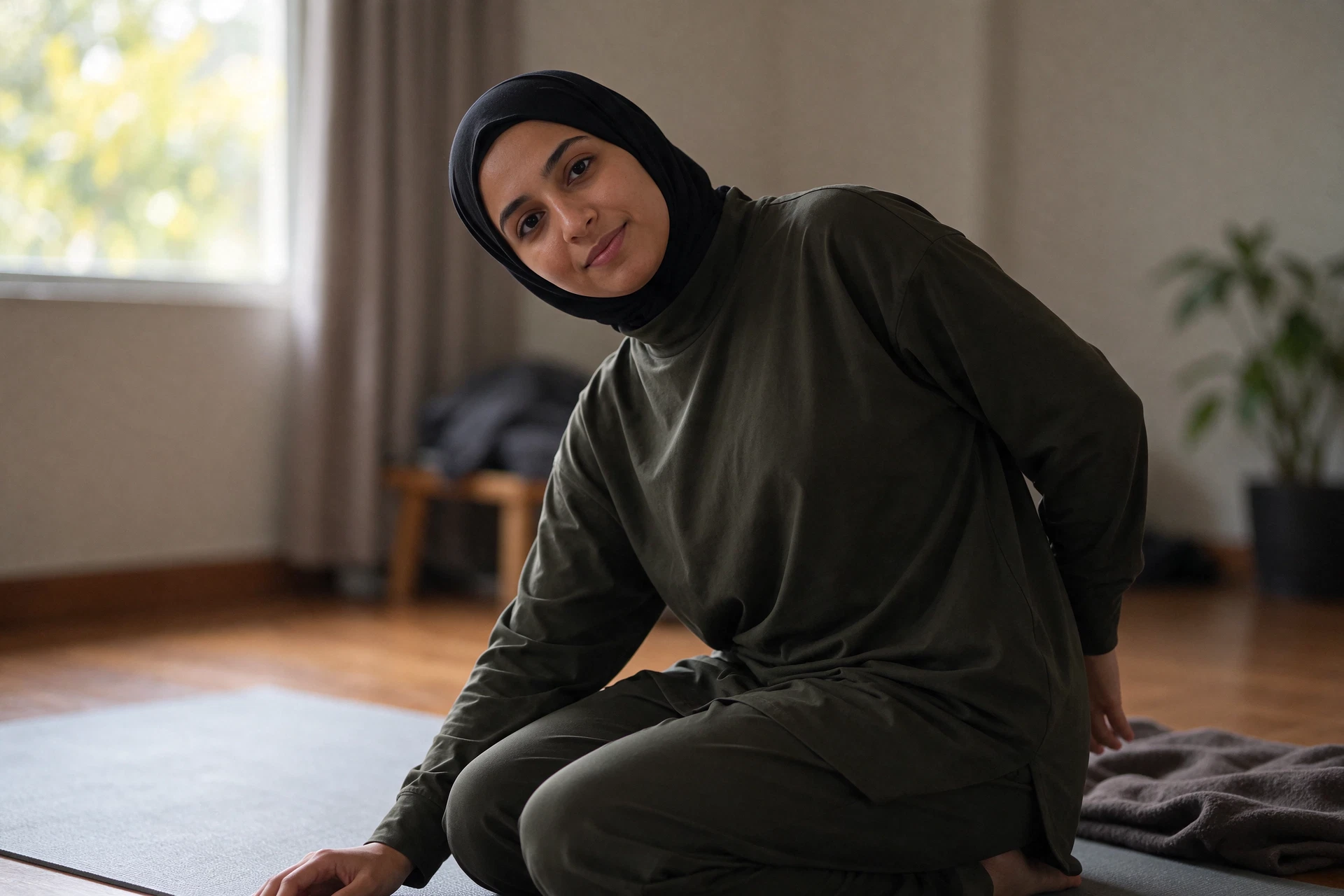
- Spine. Seated, place hands on your thighs and gently round and arch your back, like a soft wave.
- Hips and knees. From sitting, straighten one leg out in front, hold a breath, then lower. Alternate sides.
- Hands. Open and close your fingers slowly, then spread them wide.
Morning stiffness often responds well to this kind of warm-up, and so does the stillness that builds after sitting through the day. If you time a few minutes around wudu or before prayer, the movement can fold into rhythms you already keep.
A gentle note from me, Aiza: on my own stiffer mornings, I start with just the neck and shoulders before I decide whether to do more. Giving myself that small, no-pressure beginning makes the rest feel possible far more often than a strict plan ever did.
Adapting Intensity Around Pain Levels
Your pain is not the same every day, and your routine should not be either. The aim is to meet your body where it is, scaling movement up on calmer days and down when pain flares, rather than following a fixed plan that ignores how you actually feel. Learning this skill is one of the most protective things you can do.
A simple way to adapt is to picture three settings for any day:
- Green days. Pain is low and steady. You can move through your full gentle routine, perhaps adding a round or holding stretches a breath longer.
- Amber days. Pain is present but manageable. Shorten the routine, reduce the range of each movement, and rest more between exercises.
- Red days. Pain is high or a flare is brewing. Do the smallest kind thing, maybe a few finger and ankle circles, or simply rest without guilt.
Stopping before sharp pain is not giving up. It is how you protect tomorrow's ability to move. Pushing through on a red day often borrows energy you will pay back with a longer flare.
Reading your pain this honestly connects to a wider skill called pacing, which helps you spread activity so you avoid the push-crash cycle. Our guide on pacing yourself to avoid chronic pain flare-ups explores this in more depth.
What would it feel like to treat a rest day as part of the plan rather than a failure of it?
Staying Consistent Without a Gym Membership
Consistency, not intensity, is what loosens stiff joints over time, and you can build it entirely at home. Encouragingly, support for movement is becoming more routine in care: in 2024, the CDC found that 54% of adults with arthritis had been counselled by a health care provider about physical activity to manage their symptoms (CDC, Arthritis Management, Preventing Chronic Disease, 2024). Movement belongs in your care, and keeping it going at home is very doable.
A few things make a home habit stick:
- Anchor it to something you already do. Link a short routine to a daily prayer, your morning tea, or settling the children. The existing habit becomes your reminder.
- Keep the bar low. Promise yourself two minutes. You can always do more, but two minutes is small enough to never skip.
- Let it be imperfect. A missed day is not a broken streak. Simply begin again the next time.
- Make the space ready. Leave a cushion or mat where you will see it, so starting takes no effort.
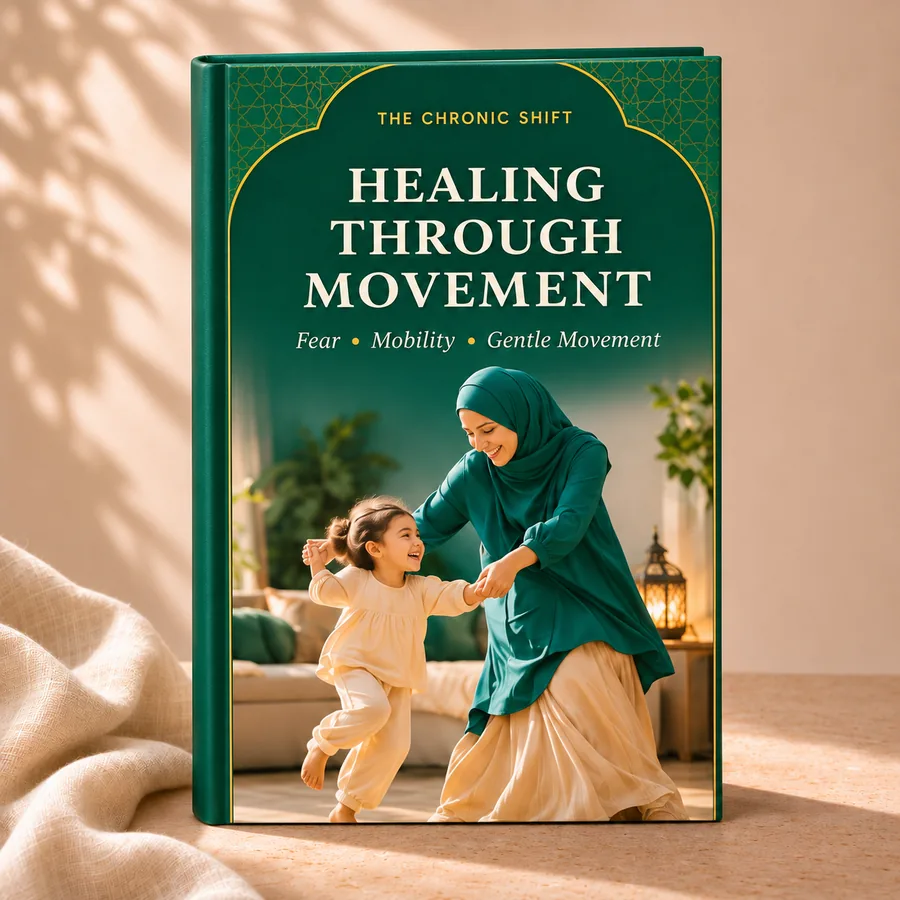
For mothers especially, fitting movement around children is its own puzzle, and gentle home routines let little ones be nearby while you move. That presence can be part of the point.
If going it alone feels hard, companionship helps. The Chronic Shift offers group coaching where Muslim women build gentle, sustainable movement habits together, through a compassionate Islamic lens, with room for faith, rest, and real life. You can read what group coaching for chronic back pain involves to see whether that kind of support fits you.
One last, important thing: this guidance complements medical care, it does not replace it. If your pain is new, worsening, or you are unsure what is safe, speak with your doctor or physiotherapist before starting. Then pick one gentle movement from this guide and give it two minutes today. That small, repeatable start is where more room for movement begins.